

Protecting Hai Phong’s culinary brand
Protecting the street food brand is an urgent requirement for Hai Phong to achieve sustainable tourism development, building on the very values that have made the city’s name.
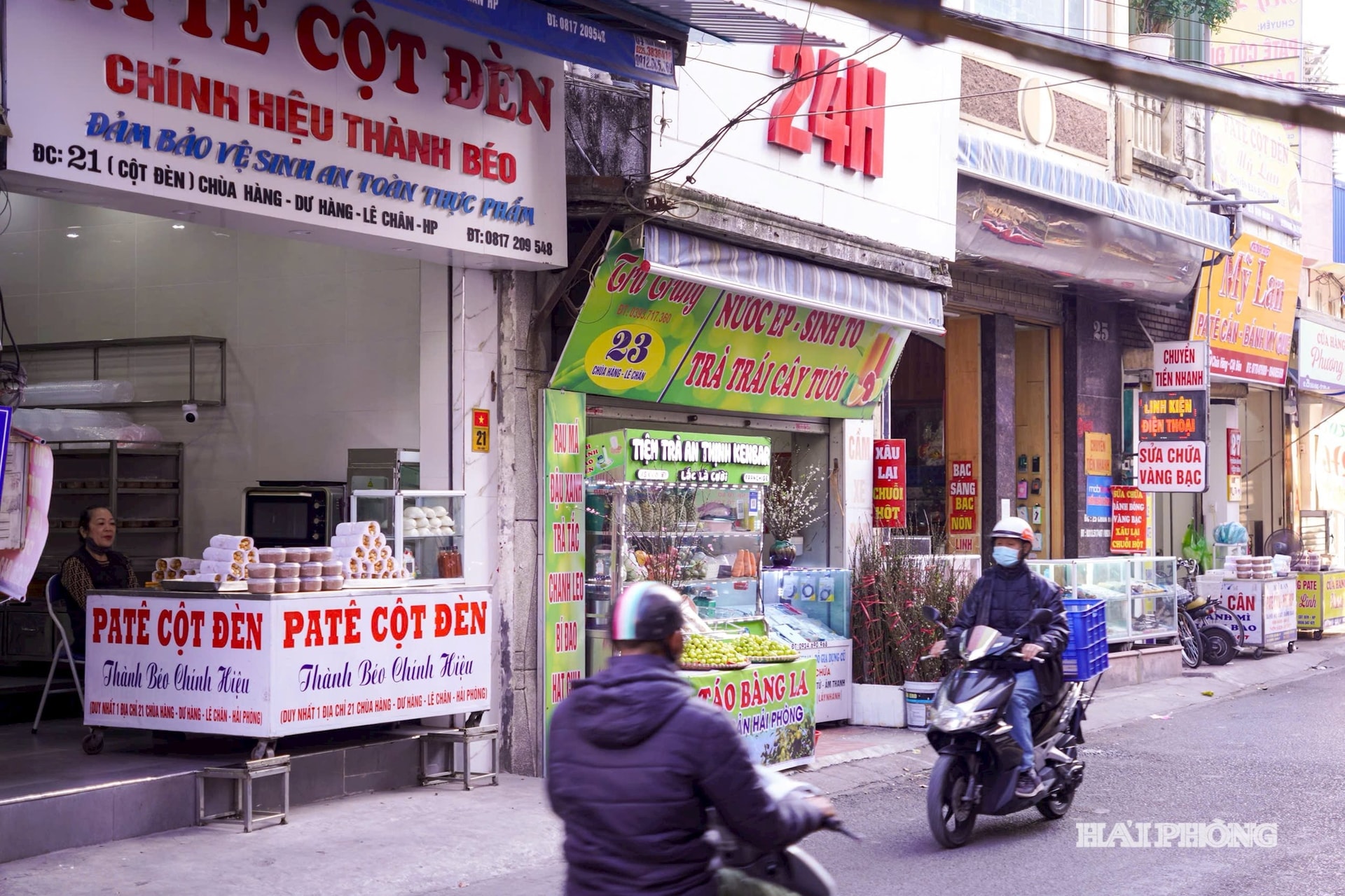
Recently, information related to a food safety case has caused considerable misunderstanding surrounding Hai Phong’s traditional pate Cot Den brand. The Hai Phong Department of Culture, Sports and Tourism has officially clarified that the fresh, traditional pate sold at Cot Den Market is not related to the product labeled “Pate Cot Den” produced by the company that has been sanctioned. Beyond reassuring consumers and protecting legitimate artisanal producers, this clarification serves as a clear warning about existing loopholes in safeguarding the city’s street food brands.
Consumer confusion in the “Pate Cot Den” case is understandable. The similar name, association with a familiar local landmark, and the fact that the product was marketed as a widely distributed canned item all contributed to the misunderstanding. When the manufacturing company became embroiled in a case involving unsafe meat, the consequences extended far beyond recalled and destroyed batches. Artisanal pate producers at Cot Den market were immediately affected: their businesses faltered, revenues declined, and reputations suffered—despite having no connection to the violation.
At this point, the issue is no longer about the right or wrong of a particular company, but rather about gaps in protecting traditional culinary brands. “Pate Cot Den” has long been a folk name for a dish tied to urban memory, market spaces, and family-run pate workshops that have existed for decades. Yet, from a legal perspective, the name has never been formally recognized or protected under any branding or intellectual property framework.
According to legal experts, this is not an isolated case. In fact, many traditional specialties have had their trademarks registered by other businesses, or marketed under similar names, leading to confusion about product origins. The root cause lies in the very delay of traditional producers in accessing and using legal protection tools.
Many long-established artisans still hold a familiar mindset: if the product is good, customers will come—why bother with paperwork or trademark registration? Complicated procedures, high costs, and limited legal knowledge all combine to create a dangerous legal vacuum. That vacuum is quickly filled by actors who understand the law, possess financial resources, and are ready to “file first.”
Under Vietnam’s current intellectual property law, names associated with geographical locations can be protected through geographical indications or trademarks. However, to qualify as a geographical indication, a product must meet very stringent requirements: its reputation, quality, or characteristics must be determined by specific geographical conditions. Not all local specialties meet these criteria.
For trademarks, the Law on Intellectual Property follows the “first-to-file” principle. Article 90 of the 2025 Law on Intellectual Property clearly stipulates that where multiple identical or confusingly similar applications exist, protection shall be granted only to the valid application with the earliest filing date. This explains why a dish that has been closely associated with a locality for generations can still legally “lose its name” in the commercial marketplace.
However, legality under intellectual property law does not equate to immunity from other legal liabilities. If the use of a traditional product name causes consumers to be misled about its origin, such conduct may constitute violations of the Law on Competition and the Law on Advertising. The 2018 Law on Competition strictly prohibits the dissemination of misleading information for unfair customer solicitation, while the 2025 Law on Advertising also bans false or deceptive claims regarding the origin of goods. The penalties are by no means light, and consumers are fully entitled to seek compensation if they can prove they were deceived.
The "Pate Cot Den" case illustrates the systemic risks to Hai Phong's street food. The port city is nationally renowned for dishes such as banh da cua, banh mi que, fish noodle soup, crab spring rolls, and pate. Food tours have become a signature tourism product. Yet if promotion is not accompanied by legal protection, today it is pate—tomorrow it could easily be another iconic dish.
Traditional cuisine is a form of living heritage and, at the same time, a shared economic asset of the community. Every household business and every resident holds a “stake” in that collective reputation. Protecting this common asset cannot rely on spontaneity alone. In the long term, it requires coordinated action from regulatory authorities, professional associations, and producers themselves: developing collective trademarks and certification marks, moving toward geographical indications when conditions allow; establishing clear mechanisms to distinguish traditional products from industrial ones; and strengthening food safety management across the entire value chain.
The “Pate Cot Den” case is a costly lesson. It serves as a reminder that cuisine is not merely food, but an urban brand, the livelihood of many local residents, and the reputation of an entire city. Protecting street food brands is not a matter of appearances or formality; it is an urgent necessity if Hai Phong wants to pursue sustainable tourism development based on the very values that have made its name.
Hai Hau