

Enhancing effectiveness of collective economy
Hai Phong’s collective economic sector continues to affirm its core role in agriculture, credit expansion, trade, services, industry, environment, etc.
Strengthening support and supply – demand linkages
Following the merger with Hai Duong province, Hai Phong city now has around 800 cooperatives, cooperative unions and people’s credit funds, with 136,795 members, creating regular jobs for more than 12,000 workers. The collective economic sector continues to affirm its core role in agriculture, credit expansion, trade, services, industry, environment, etc.
In 2025, the city Cooperative Alliance has supported hundreds of cooperatives in participating in fairs, exhibitions and product promotion weeks inside and outside the city, organized and coordinated the display and promotion of One Commune One Product (OCOP) items and other signature products of the collective economic sector.
Through connection activities, many cooperatives have gradually joined production and consumption linkage chains and become more proactive in securing stable market outlets.
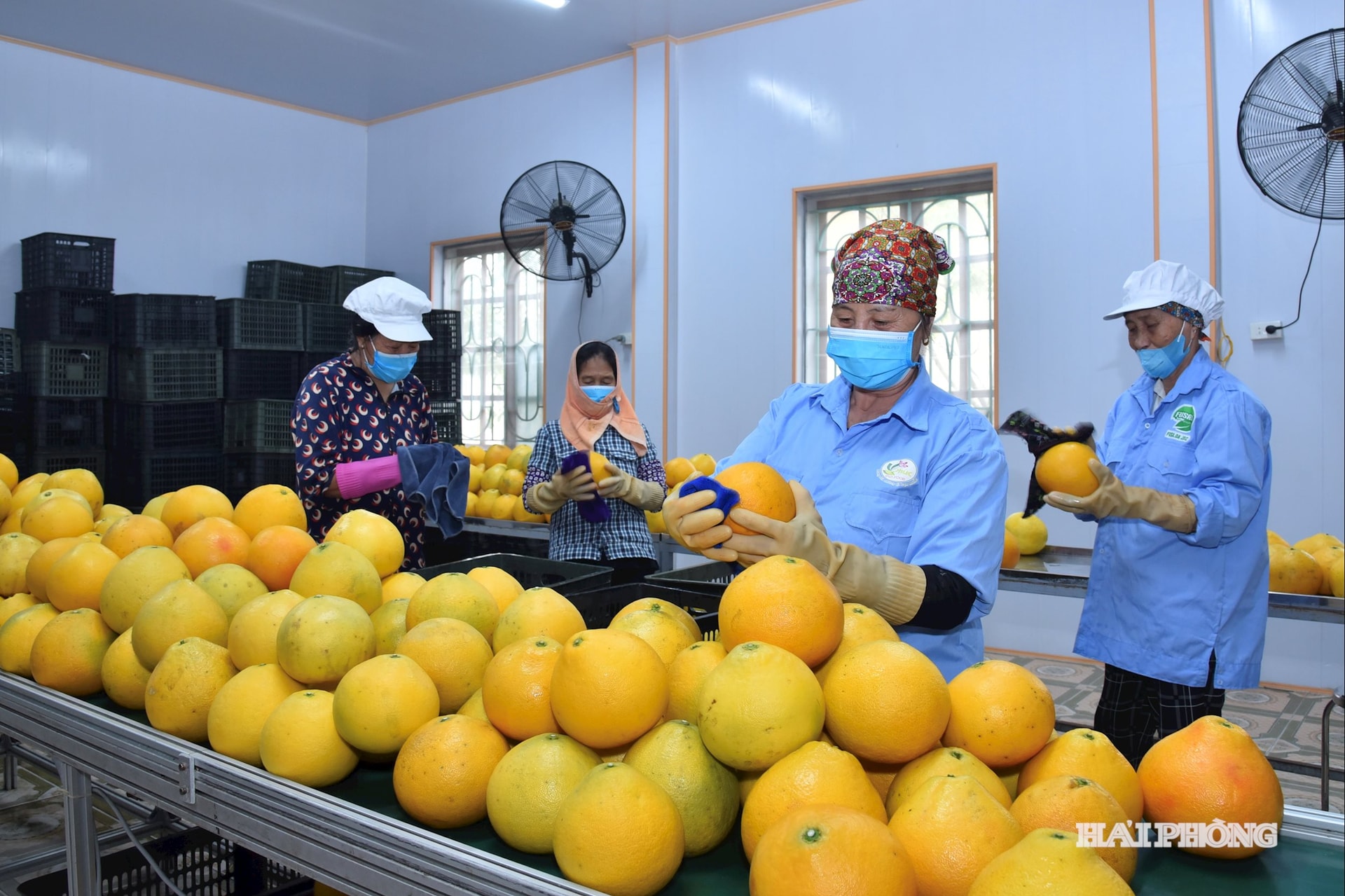
V-Phuc Green Agriculture Cooperative in An Thanh commune specializes in producing, purchasing and distributing agricultural products, creating jobs for many seasonal local workers. In recent years, the cooperative has steadily expanded its agricultural exports to Europe.
In 2025 alone, it has maintained traditional partners, exported five tons of pomelo and strengthened domestic distribution. Its raw material area has been granted planting area codes, meeting standards required by the European Union, the US and Australia.
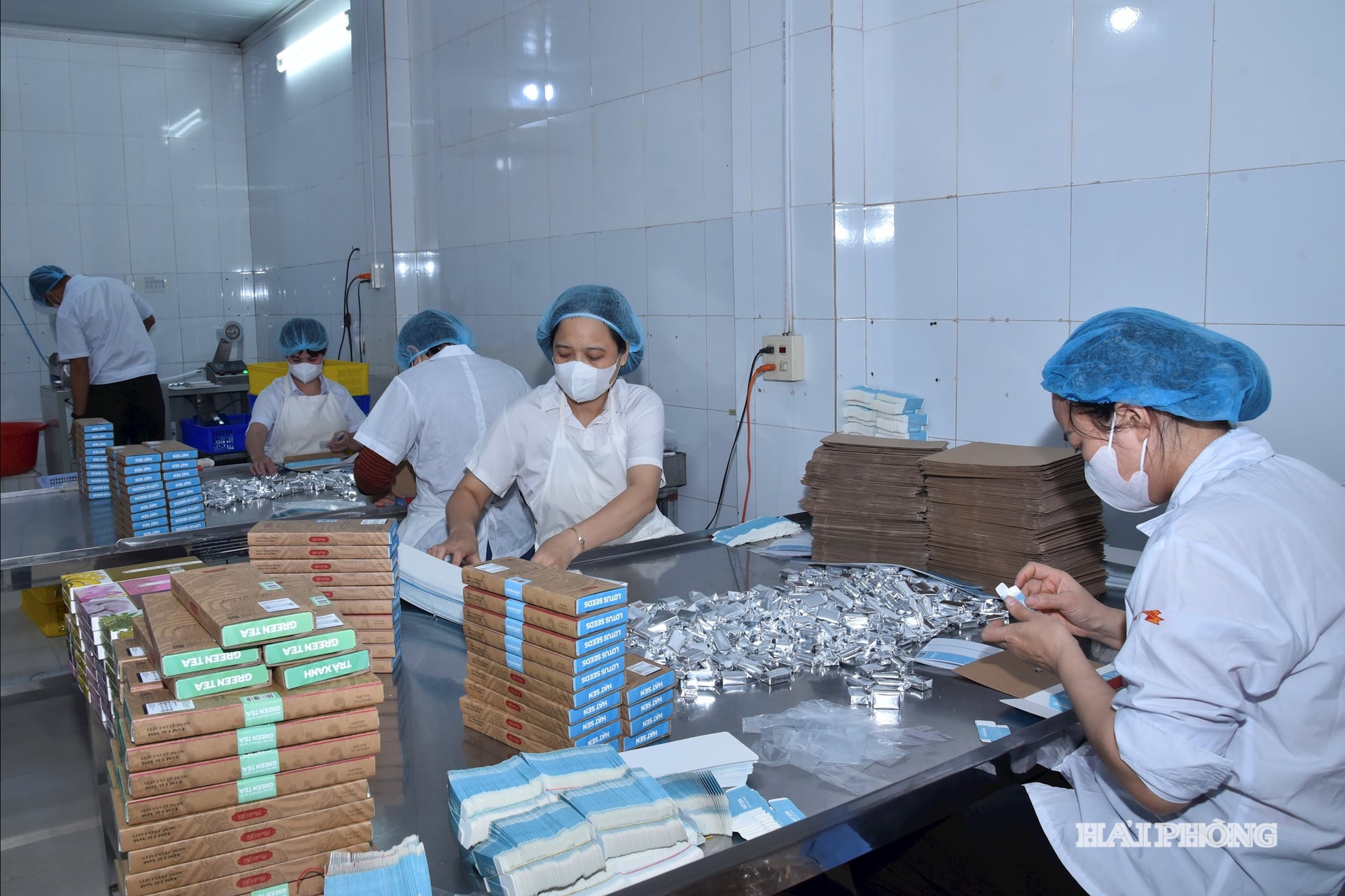
Hai Dung mung bean cake production facility in Thanh Dong ward, rooted in a family trade, has invested over many years to complete its production process. In 2019, its “Huong Xu Dong” mung bean cake was recognized as a four-star OCOP product.
The facility now has 12 product lines favored by domestic consumers, becoming familiar gifts. Doan Thi Dung, a representative of the facility, said that participation in the collective economic model and the OCOP Club has helped the unit strengthen promotion, expand distribution channels and move toward sustainable development.
Companionship to overcome difficulties
Vice Chairman of the city Cooperative Alliance Nguyen Huu Dao said that in 2025, the city’s collective economic sector has fulfilled its roles and tasks. The merger of the cooperative alliances of the two localities was implemented on schedule, with the organizational structure quickly stabilized toward a streamlined, effective and efficient model.
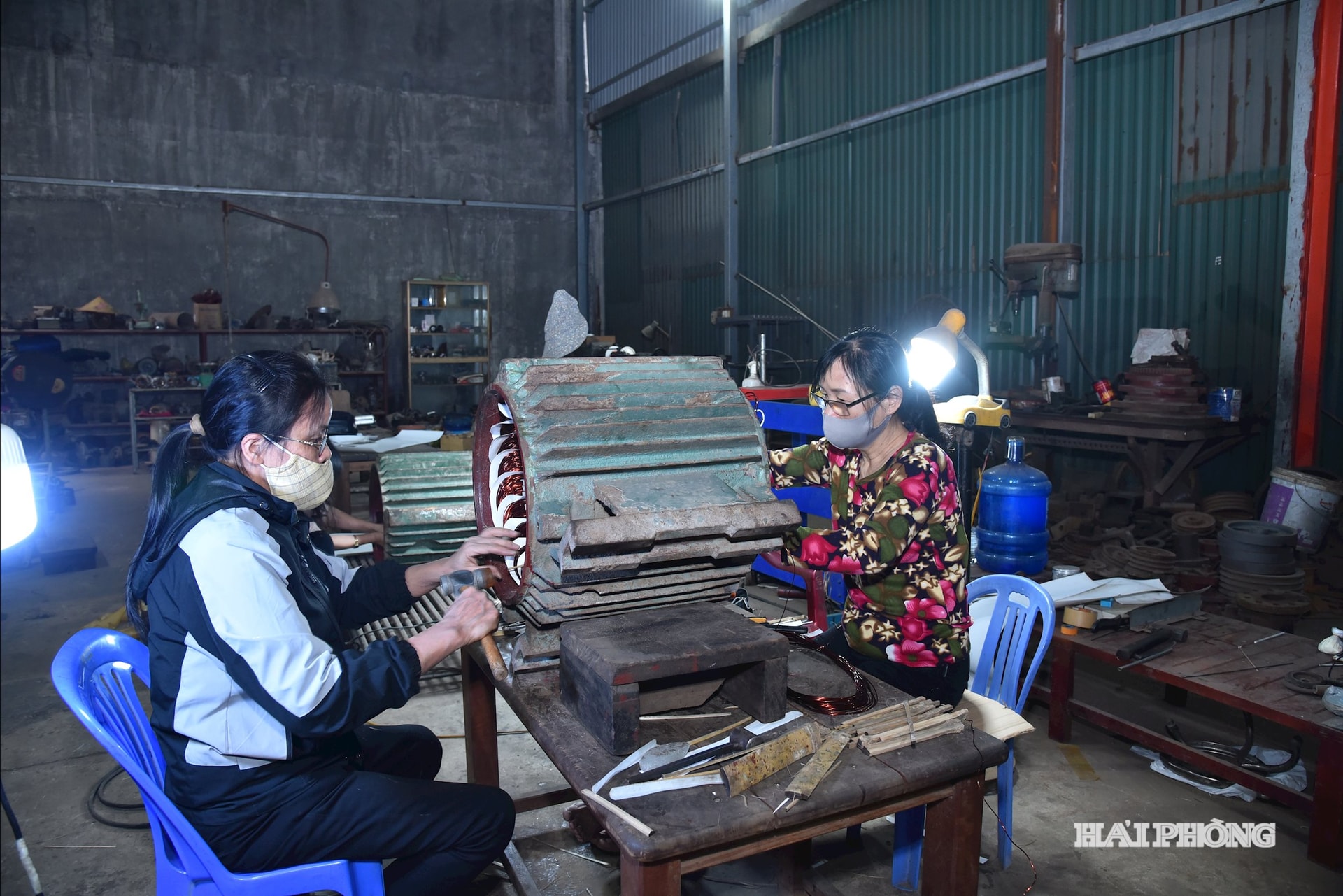
Alongside market connectivity, training and capacity-building for cooperatives continued to be implemented in a coordinated manner. Over the past year, the alliance co-organized 10 training courses for craft village workers and traditional trades, and held multiple training sessions for cooperative managers on governance, production and business planning, digital transformation and trade promotion skills.
The training programs were designed flexibly and closely aligned with practical needs, helping equip units with necessary knowledge and skills to apply directly to production and business activities.
To further promote its role as a “midwife” for the collective economic sector, the city Cooperative Alliance will focus on enhancing the capacity of cooperative management teams; stepping up training, technology transfer and scientific application; supporting cooperatives in building production and consumption linkage chains; and expanding domestic and export markets.
The alliance will also coordinate with the Department of Agriculture and Environment to implement solutions to address land and site constraints, prioritizing the allocation, assignment or leasing of public assets and welfare facilities for cooperatives to use as headquarters and production and business sites.
With proactive innovation by cooperatives and comprehensive support from the city Cooperative Alliance, departments and agencies, the collective economic sector will continue to unlock its potential and contribute to Hai Phong’s goal of rapid and sustainable development.
VAN NGA