

Awakening craft village tourism
Many traditional craft villages are being awakened, becoming spaces for cultural, historical and livelihood experiences, offering a new look for Hai Phong tourism.
.jpg)
Appeal of craft village tourism
Quiet and uncrowded, craft village tours in Hai Phong give visitors a sense of slowness and authenticity. Here, tourists can witness production processes firsthand, talk directly with artisans, and listen to stories about traditional crafts closely tied to rural life over generations.
“What we remember most is not the products we bought, but the stories of the artisans and the peaceful village atmosphere. I used to think Hai Phong was only famous for its sea and cuisine. Joining a craft village tour, I saw a very different Hai Phong, deep, intimate, and rich in identity. Being able to try making handicrafts myself was a very memorable experience because it helped me better understand local traditional culture,” said Tran Thi Bich Hai, a visitor from Ha Noi, after a trip to suburban craft villages in Hai Phong.
Her impression is shared by many visitors to Hai Phong, partly reflecting the growing appeal of the city’s craft village tourism.

According to Tran Tien Truong, a representative of a travel company operating domestic tours in Hai Phong, craft village tourism is seen as “the missing piece” to complete the city’s tourism product chain. Hai Phong has the sea, islands, famous relics and scenic sites, and dynamic urban areas. Adding craft villages, rural tourism, and cultural experiences will makes tourism products more diverse and deeper. Several craft villages attractive to tourists include Chu Dau pottery, Duong Dong pottery, Cat Hai fish sauce, Lat Duong sedge mats, Kien Bai incense, and Ninh Giang ramie cakes.
Developing craft villages linked with tourism
Hai Phong currently has many traditional craft villages with long-standing ties to rural and suburban life. These crafts not only create jobs and income for local residents but also preserve distinctive cultural values of the coastal region.
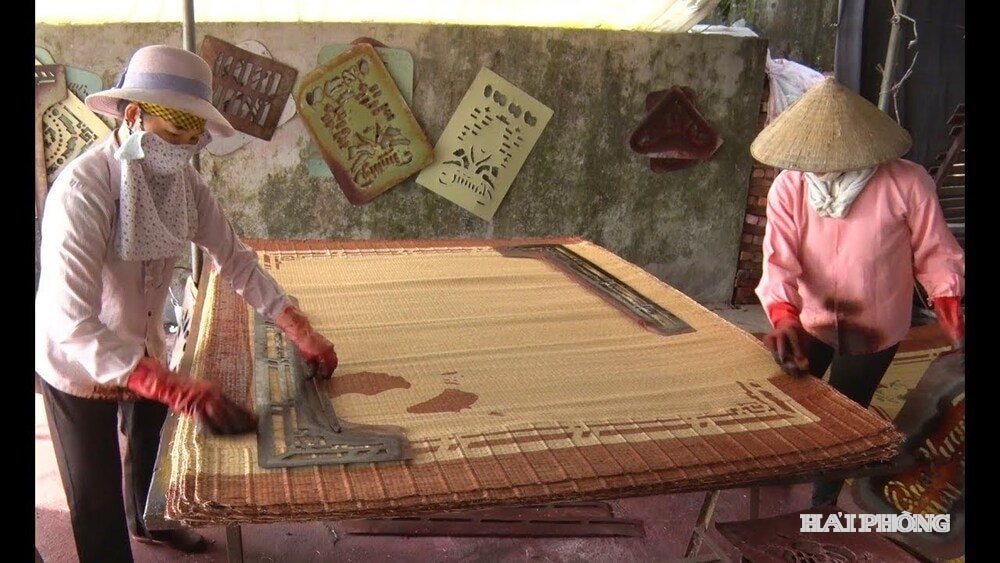
In recent years, the city has focused on developing craft villages in connection with tourism and new-style rural building. Rural transport infrastructure has been gradually improved, while many craft villages have been supported in developing OCOP products, registering trademarks, and increasing product value.
More importantly, development thinking has shifted clearly from purely production-oriented activities to combining production with tourism services. Some craft villages have begun to form experiential spaces, welcoming visitors, introducing production processes, and selling products on site.
According to Nguyen An Hung, Chairman of the city Craft Village Association, in the context of integration and digital transformation, craft villages must change to survive and develop. Craft preservation depends not only on traditional techniques but also on the ability to adapt to markets and new visitor demands.
Developing craft village tourism is a long-term direction that requires close coordination among sectors, levels, and local communities. The city will continue to review and plan craft villages with tourism potential, prioritize infrastructure investment, and support training in tourism skills for residents. The consistent approach is to put people at the center. Residents are both the custodians of the crafts and the direct beneficiaries of tourism. When people see the economic value linked to cultural preservation, craft villages will have sustainable vitality.
THU HANG