

Fascinating mangrove forest experiences
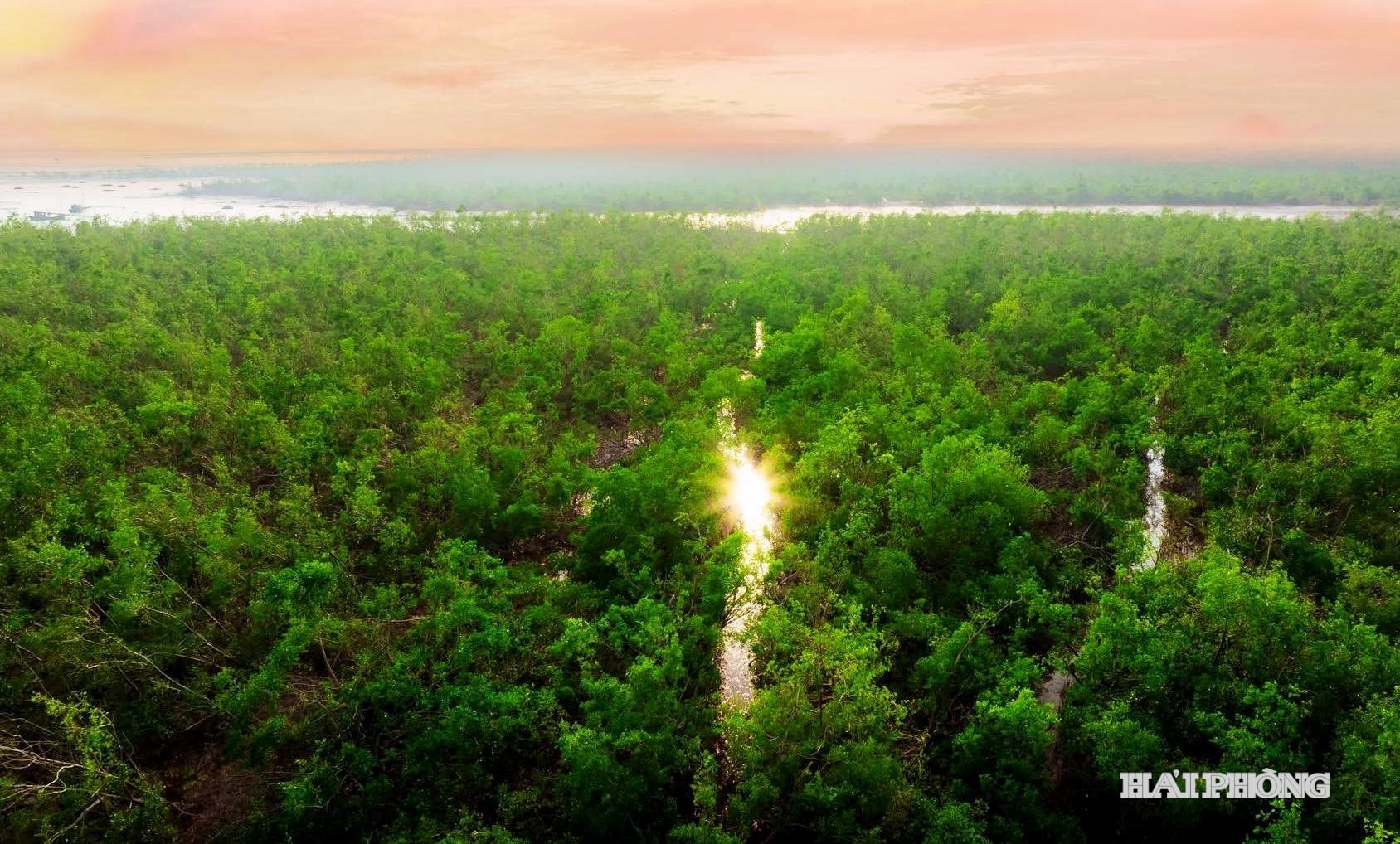
Mangrove forests stretching along the coast have created a distinctive mark on Hai Phong’s ecotourism map.
.jpg)
Coastal “green lungs”
About 20 km from the city center, the mangrove forest in Nam Do Son ward has emerged as a prominent ecological highlight of Hai Phong. This year, the Dragon Mangrove Forest ecological park has been put into operation, making this area more vibrant and attractive to visitors. With rich vegetation such as su (Aegiceras corniculatum), vet (Bruguiera), and duoc (Rhizophora), along with many small species like fiddler crabs, snails and crabs, the forest creates a lively tidal flat ecosystem.
Visitors often speak of a special “scene-shifting moment” there. From the vast green of the forest, the view suddenly opens onto an airy beach. “I am truly impressed by the sense of peace here. The forest and the sea blend together within just a few steps, offering an unforgettable experience,” said Nguyen Quoc Quan, a visitor from Ha Noi.
In addition to the mangrove forest, areas near Nam Do Son are home to diverse ecosystems, including ancient red-bud banyan trees on Hon Dau island and clusters of hundreds-of-years-old persimmon trees on Ngoc mountain. Together, they create a rich natural space, leading visitors on a journey that is both familiar and unique.
Meanwhile, Vinh Quang mangrove forest in Hung Thang commune offers a rustic, pristine and poetic setting. Located only about 40 km from the city center, it features a vast ecosystem with ban (Sonneratia), nipa, and casuarina forests surrounding the Van Uc river.
With a total area of more than 809 ha, this mangrove forest plays an important role in protecting sea dikes and providing livelihoods for local residents. At the same time, its ecosystem is home to aquatic species, birds, bees, etc., generating income for many households engaged in forest protection and management.
Experiential and cultural destinations
With its combination of ecological richness and close ties to coastal life, Hai Phong’s mangrove forests are becoming ideal destinations for those seeking to slow down amid modern life. Many visitor groups choose to join kayaking tours, collect crabs and snails, or simply walk through stretches of lush green forests.
At Dragon Mangrove Forest, visitors also have opportunities to learn about the formation of the ecosystem and the role mangroves play in preventing erosion and mitigating storm impacts. Stories about coastal culture and local customs shared by guides throughout the journey are highlights that deepen visitors’ appreciation of the land.
According to leaders of the People’s Committee of Nam Do Son ward, ecotourism development is not only aimed at economic growth but also carries special significance in spreading messages of environmental protection and preserving indigenous cultural heritage. The conservation and promotion of mangrove forest values are always a top priority for the locality.
Travel businesses in Hai Phong also clearly see the great potential of mangrove forests. Le Thu Lan, a representative of Queen Travel Tourism and Transport Co., Ltd. in Ha Noi, said: “Tourists today are very interested in green tourism, especially families with children and young groups. Mangrove forests have advantages that few destinations can match: they are pristine, safe and rich in educational value. If products are standardized, this will certainly become a tourism brand of Hai Phong.”
Hai Phong’s mangrove forests possess ideal conditions to become leading ecological destinations in northern Vietnam. This is not only about natural beauty, but also about how local people and authorities work together to protect and transform the forest–sea ecosystem into a long-term resource. As boats continue to carry visitors through green ban forests, and as the sound of waves blends with the wind through casuarina trees, Hai Phong’s mangrove forests will keep telling the story of a land living in harmony with nature, moving toward a green and sustainable future.
TUAN LINH