

Textile and garment businesses accelerate production at year-end
In the final months of the year, textile and garment businesses in Hai Phong have entered their peak production period to meet deadlines for export orders and the domestic market.
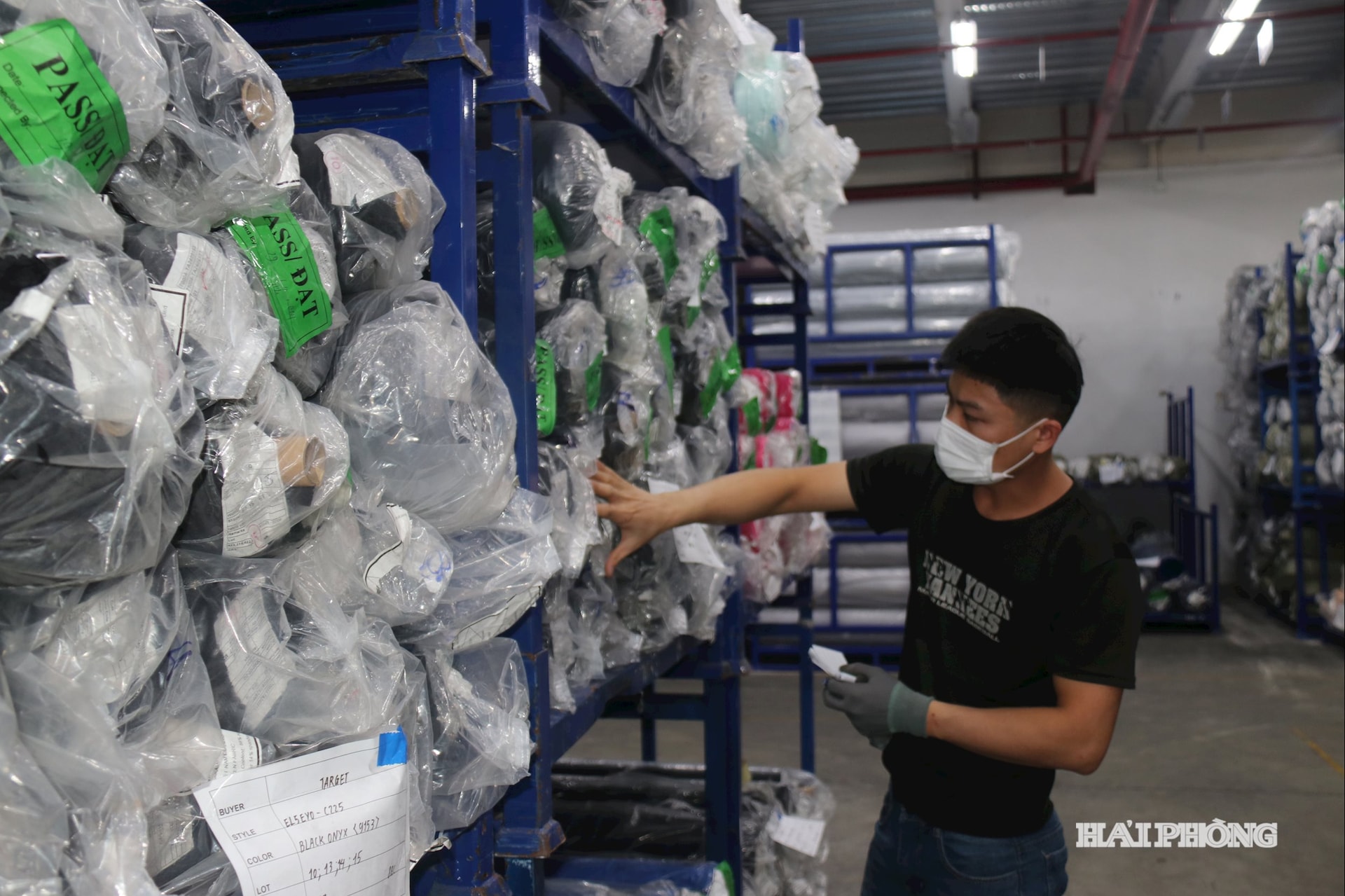
Efforts to complete orders
The working atmosphere at several garment companies in Hai Phong is urgent and workers are in high spirits. The year-end pace is noticeably more bustling. Many enterprises are striving to expand orders, improve incomes, and work toward stable growth amid continued market fluctuations.
At TBT Garment Co., Ltd. in Ha Tay commune, workers are rushing to produce apparel for the final export shipment to the US. About three months ago, the company entered its peak production period for year-end export goods. Although the market has not expanded, orders have increased steadily year over year, with periods requiring continuous overtime to meet deadlines.
This year, the company has exported more than 2 million products to the US, South Korea, and the EU, up 15% from the same period in 2024. Exports to the US accounted for 80% of total volume, up 20%, and revenue reached 2.5 million USD, a rise of 10%.
According to the city Statistics Office, the city’s industrial production index in October is estimated to increase by 3.81% compared to September. Several key industries recorded strong growth, including apparel manufacturing, which rose by 26.26%, and the production of electronic products, computers, and optical goods, 16.02%.
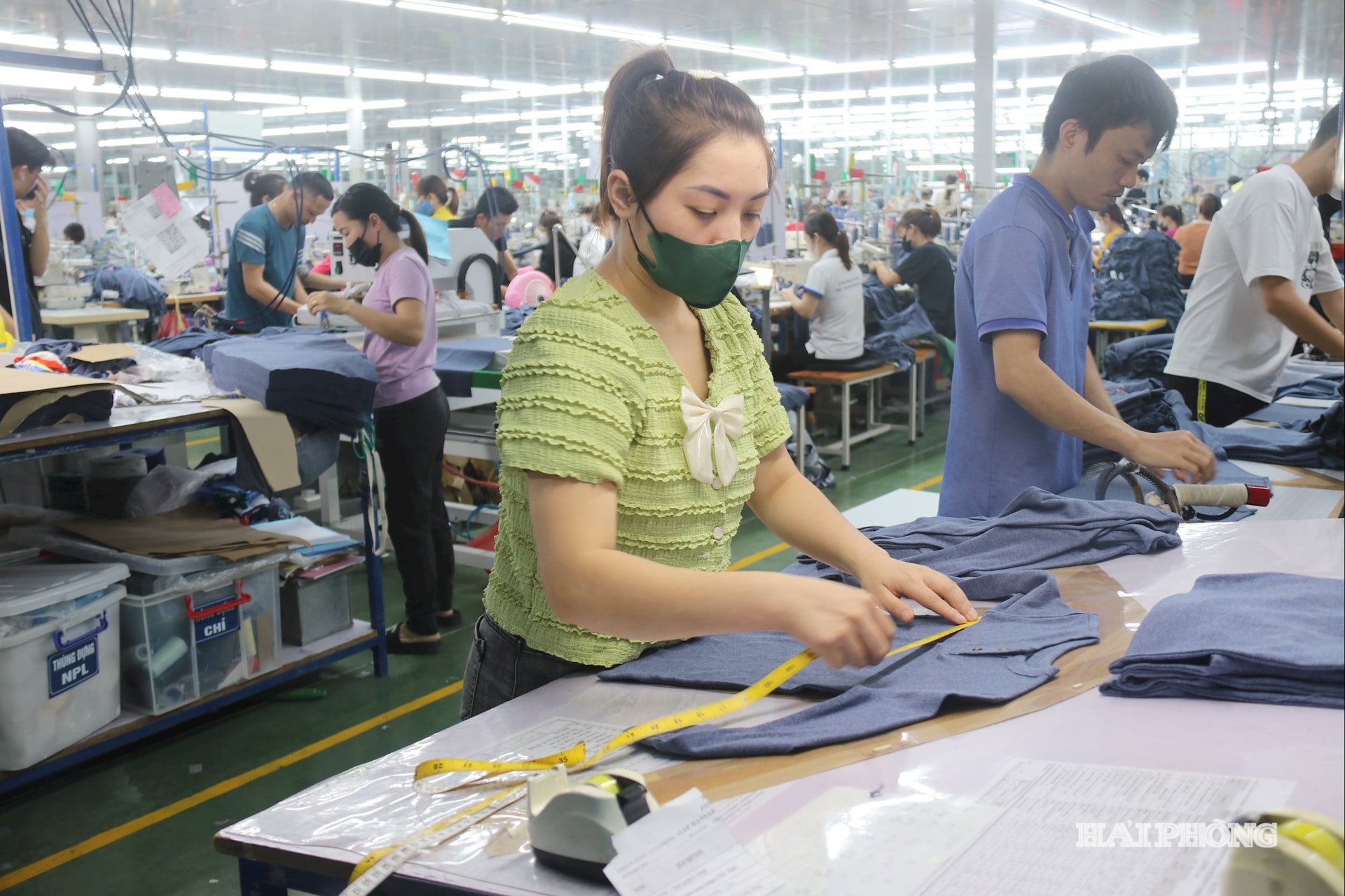
Le Viet Thu, Director of TBT Garment Co., Ltd., said: “The end of the year is always the busiest time. We must deliver goods on schedule to maintain credibility with partners while seizing opportunities to secure new orders for next year. Workers are making great efforts, and many volunteer for extra shifts to increase their income.”
Retaining workers
The year-end period always creates significant pressure on labor needs. To ensure stable production, many garment enterprises in Hai Phong have strengthened welfare policies and support measures to help employees feel secure at work. Along with salary, allowances for transportation, meals, and attendance are maintained and even increased in key production units.
Pham Minh Duc, Chairman of the Trade Union of Minh Thanh Export Garment Co., Ltd. in Hung Dao ward, said the labor market is currently highly competitive. Therefore, besides wages and bonuses, the company also listens to workers’ concerns and pays more attention to their well-being to retain them.
Along with expanding markets, many garment businesses in Hai Phong continue to invest in upgrading production lines and adopting new technology. Some have introduced automated cutting machines, automated fabric-spreading systems, and software for progress management and quality control, thereby improving productivity, reducing errors, and saving time for product completion.
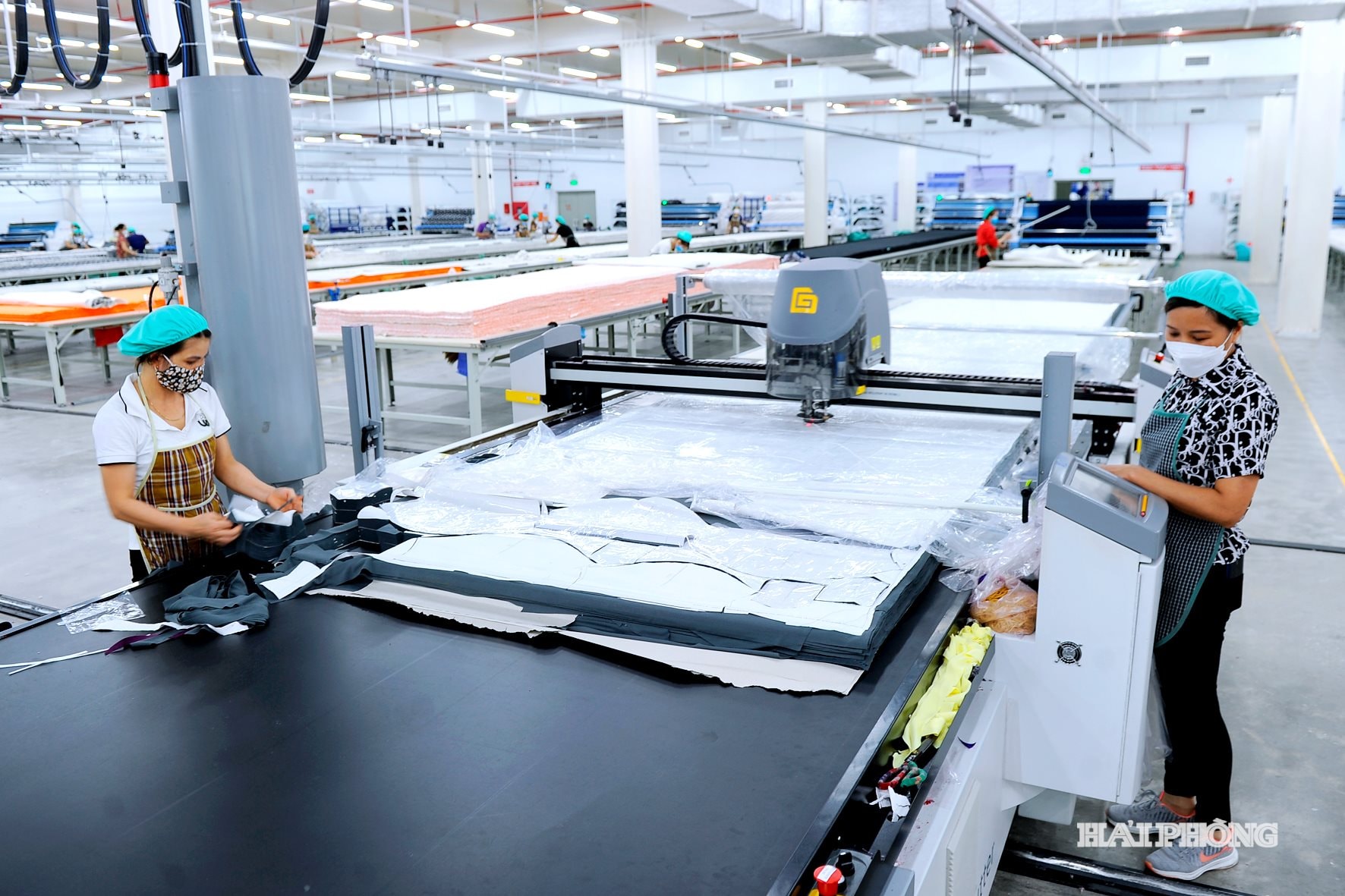
A representative of Tran An Garment Co., Ltd. in Thanh Dong ward said that since switching to automated cutting and sewing, the company has overcome the limitations of mechanical sewing machines, improved quality, reduced defects, and achieved higher economic efficiency. The company has now replaced 100% of its mechanical sewing machines.
In 2025, many textile and garment enterprises in Hai Phong have strengthened skill training for workers. Short-term training sessions held directly at factories helped employees quickly master machinery and improve operating skills.
According to the Hai Phong Economic Zone Authority’s report on the implementation of the national development strategy for textile-garment and footwear industries to 2030, with a vision to 2035 in the city, production in these sectors continues to maintain stable growth, significantly contributing to national GDP. These are labor-intensive industries, representing 20% of the total workforce in the industrial sector.
Entering the seventh term (2025–2030), with a focus on sustainable development and a circular economy, the Vietnam Textile and Apparel Association aims for export revenue of 64.5 billion USD by 2030, with average annual growth of 6.5 – 7%, and domestic market size of 8 – 9 billion USD. The strategic priorities are “greening and digitalization,” raising the localization rate to over 60% and strengthening Vietnamese fashion brands.
MINH NGUYEN