

Hai Phong promotes rural tourism advantages
Hai Phong is not only known for its bustling seaports but also for its fertile and abundant farmland. Instead of relying solely on agricultural production, local residents have begun investing in agricultural tourism.
New destinations for visitors
In recent years, the trend of returning to the countryside for relaxation and agricultural experiences has grown strongly. Visitors can not only enjoy the scenery but also pick fruit, work in the fields, and taste local specialties.
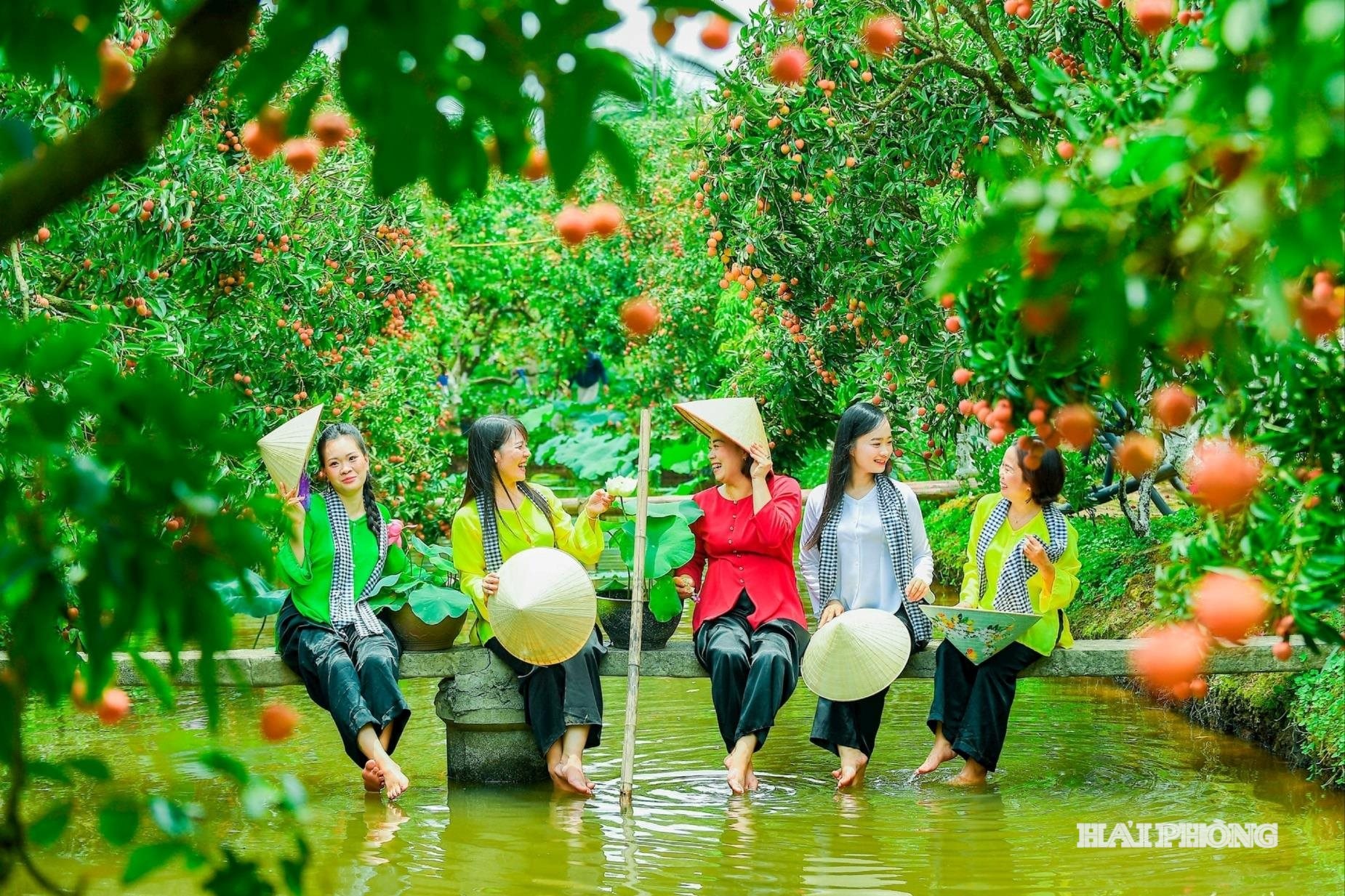
In Hai Phong’s communes of Thanh Ha and Ha Dong, groups of tourists flock to VietGAP and GlobalGAP lychee orchards during the lychee season. Many households open their gardens to visitors, helping promote their produce while increasing their income.
To professionalize this model, some communes have designated production zones, provided VietGAP and GlobalGAP training, upgraded roads, installed lighting, and built a guest house in the ancestral lychee area.
At Bau Island tourist site in An Khanh commune, tourists can enjoy various agricultural activities such as catching fish, harvesting crops, grafting branches, and hauling traditional fishing nets. They can also visit orchards or watch water puppetry, a distinctive cultural tradition of northern rural Vietnam.
Many schools choose the area for experiential learning and extracurricular activities. “I have visited many rural areas in Vietnam, but Bau Island makes me feel very friendly, with activities closely tied to daily life. The people are welcoming, the nature is fresh, and the culture is unique,” said German visitor Reinhold Weber after fishing and canoeing experiences.
In addition to these models, Hai Phong also offers experiences at Ha den grape and Bang La apple gardens in Nam Do Son and Ai Quoc wards. The city is also home to more than 60 traditional craft villages, some with centuries of history.
Strong advantages for rural tourism development
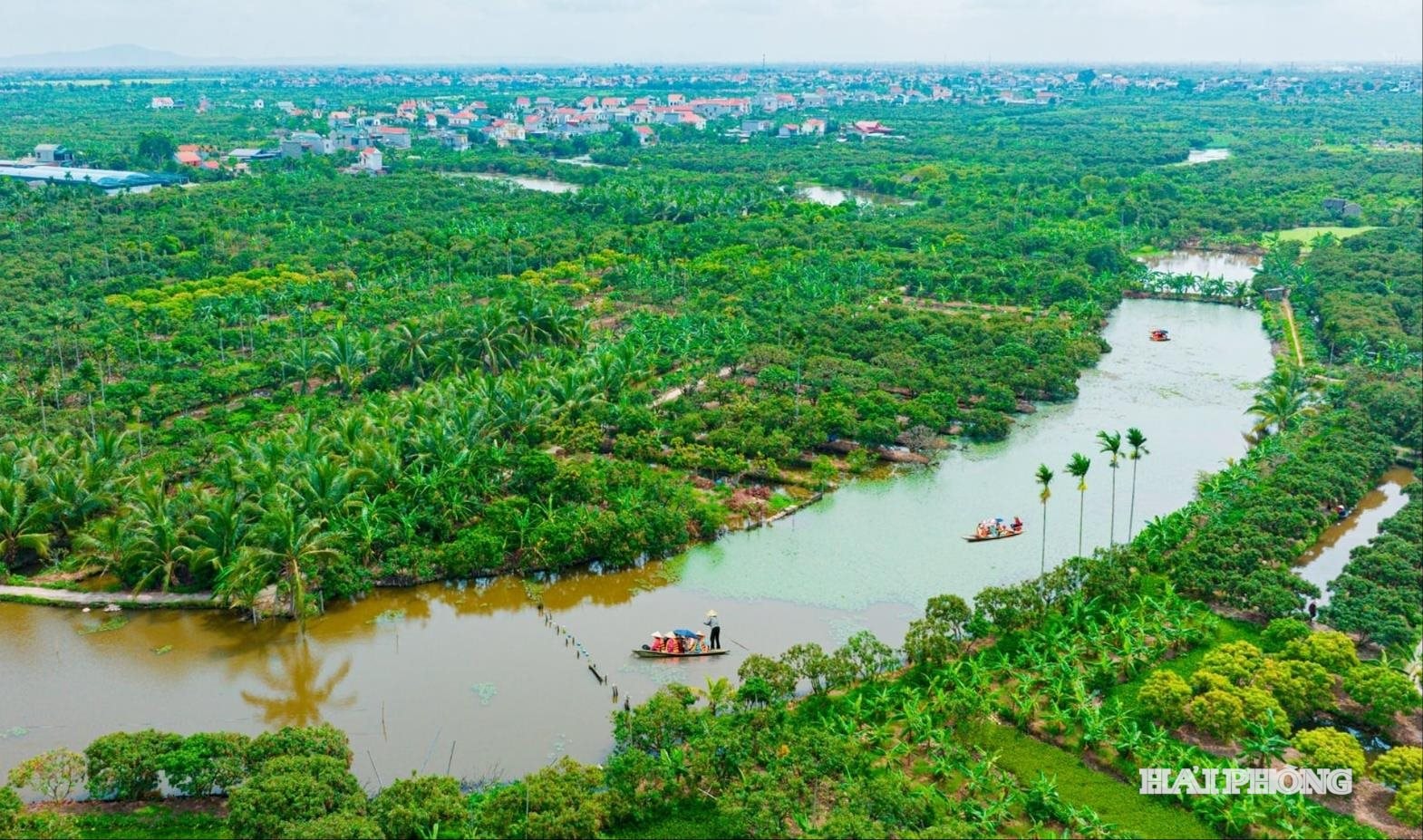
In its rural tourism development plan to 2030, Hai Phong considers this a new direction to diversify tourism products and support new rural development.
Hai Phong benefits from an agricultural ecosystem rich in fruit-growing areas (guava, lychee, apple, longan), aquaculture zones, rice fields, and ecological farms. Its dense river network supports river tourism and eco-cycling routes, while traditional craft villages, such as jewelry, noodle, fish sauce, and incense making, offer both cultural and commercial value.
The city’s dense network of historical and cultural sites also creates opportunities to combine spiritual tourism with agricultural experiences. Tran Van Ngoc, Deputy Director of the Department of Culture, Sports and Tourism, said: “Tourism resources in communes are extremely diverse. With proper organization, they can absolutely become unique, sustainable products that directly contribute to new-style rural building.”
According to travel companies, domestic tourists, especially young families and groups of friends, are increasingly seeking hands-on experiences such as being a farmer for a day, harvesting crops, enjoying farm-to-table meals, exploring craft villages, participating in outdoor activities, and providing experiential education for children.
International visitors are also showing interest in rural areas to explore local life and culture, presenting a market with significant potential if developed methodically.
Rural tourism not only creates opportunities for residents to increase their income but also contributes to cultural preservation, ecosystem restoration, and development of new products for Hai Phong’s tourism sector. When local communities are the main actors, businesses are collaborative partners, and the government plays an enabling role, rural tourism will become a driver of green growth.
LINH HUY