

Energy savings help reduce production costs
Many businesses in Hai Phong are proactively investing in technological upgrades, applying energy-saving solutions, and developing renewable energy sources.
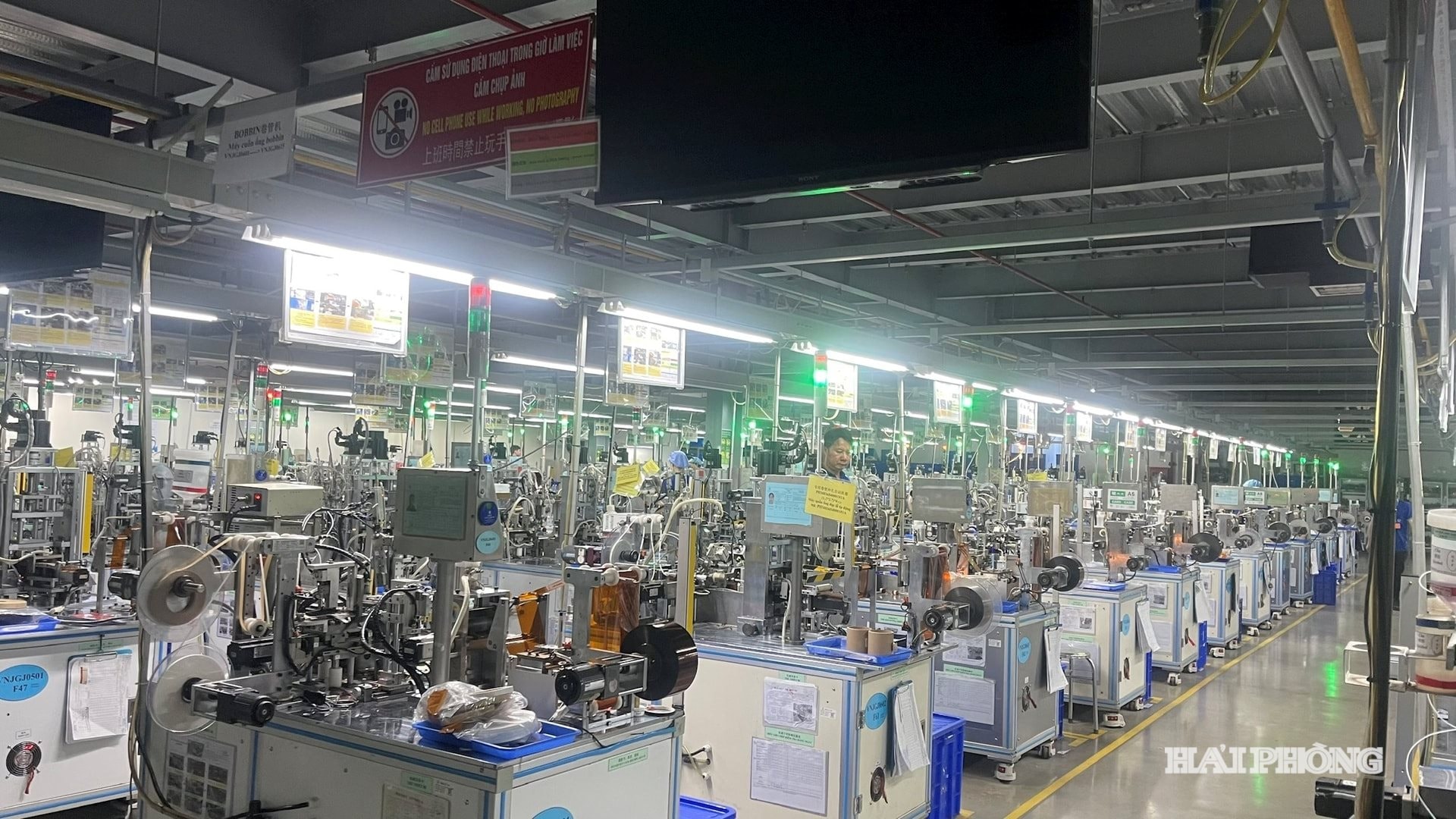
Switching to clean energy
Implementing the Hai Phong People’s Committee’s plan on strengthening electricity savings for the 2023 – 2025 period, businesses across the city have rolled out various measures to reduce energy consumption, prioritize high-efficiency equipment, and integrate renewable energy into production.
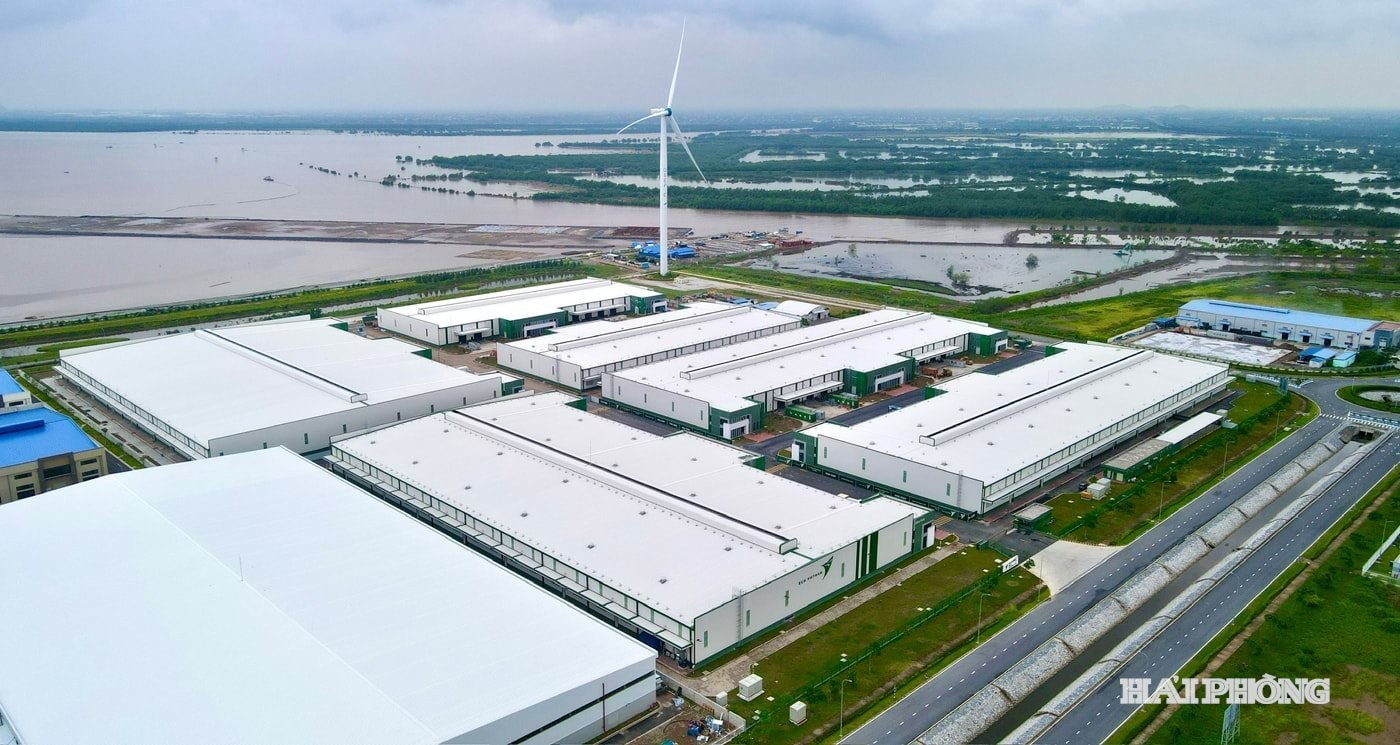
DEEP C Industrial Zones in eastern Hai Phong is among Vietnam’s pioneering ecological industrial developers. Four industrial parks under DEEP C Industrial Zones are replacing old lighting systems with Signify smart LED lights capable of automatically adjusting brightness at night, optimizing energy use and extending lamp lifespan. This green transition is estimated to save up to 45% of energy consumption compared with old halogen lights and reduce more than 60 tons of CO₂ annually.
According to preliminary data, after five years of persistently implementing an eco-industrial model, the developer saves about 5.7 million kWh of electricity each year. This power is fed back into the internal grid of the industrial parks, helping diversify their supply sources.
Ford Vietnam Co., Ltd. in Viet Hoa ward has conducted an energy audit and replaced its lighting and air-conditioning systems with energy-saving equipment while enhancing natural ventilation and lighting in the factory. The company aims to save at least 2% of its annual electricity consumption and is considering installing rooftop solar panels to self-supply power for production activities.
These models show that implementing energy-saving solutions is entirely feasible, bringing both economic and environmental benefits and aligning with the city’s green and sustainable development orientation.
Spreading energy-saving practices
In recent years, the energy-saving movement within Hai Phong’s business community has become more structured, driven by State policies and the goal of reducing production costs. The city People’s Committee issued the plan on strengthening electricity savings for the 2023 – 2025 period to concretize the Government’s directive.
Under this plan, the city People’s Committee requires major energy-consuming production facilities to set clear saving targets while encouraging the installation of renewable energy systems, the use of high-efficiency energy-labeled equipment, and participation in demand-response programs when necessary.
In practice, these policies have encouraged investment shifts toward technological solutions. At the enterprise level, projects such as rooftop solar installation, full replacement of lighting systems with smart LEDs, and real-time electricity monitoring systems are becoming increasingly common due to their direct economic benefits: lower energy bills, shorter payback periods, and reduced emissions.
At Poyun Electronics Vietnam Co., Ltd. in Tran Hung Dao ward, after just over eight months of operating its 1.9-MW rooftop solar system, the company recorded savings of about 5 billion VND, equivalent to more than 2 million kWh of generated electricity. This result has encouraged many companies in the same sector to consider “self-generation and self-consumption” as a way to reduce dependence on the national grid.
Beyond economic outcomes, policy and technology must also be driven by corporate leadership awareness and vision as well as technological partnerships. At recent conferences, representatives of major lighting and energy-management corporations repeatedly emphasized the role of smart lighting and data in optimizing consumption.
Phung Hoai Duong, General Director of Signify Vietnam, affirmed that transitioning to sustainable production combined with smart energy-saving solutions is the foundation for enhancing the competitiveness of Vietnamese enterprises. His assessment underscores that technology and data management are key to scaling up electricity-saving efficiency.
TAM PHUC