
‘Strategic duo’ bringing Hai Phong to the world
Aviation provides fast connectivity between destinations, making tourism and air transport a ‘strategic duo’ for mutual development.
Hai Phong has strong tourism potential with its international seaport, diverse infrastructure, and rich cultural and historical values. However, to fully leverage these strengths and enhance competitiveness, close cooperation with the aviation sector is essential.
The city has recently organized the conference “Cooperation and promotion of development linkage between Hai Phong’s tourism sector and the aviation industry,” demonstrating its determination to build a coordinated cooperation mechanism, strengthen competitiveness, and pursue sustainable tourism.
Among transportation modes serving tourism, aviation plays a particularly important role thanks to its ability to quickly connect destinations and meet passengers’ need for convenient travel. As a result, tourism and aviation have become a “strategic duo” developing in parallel.
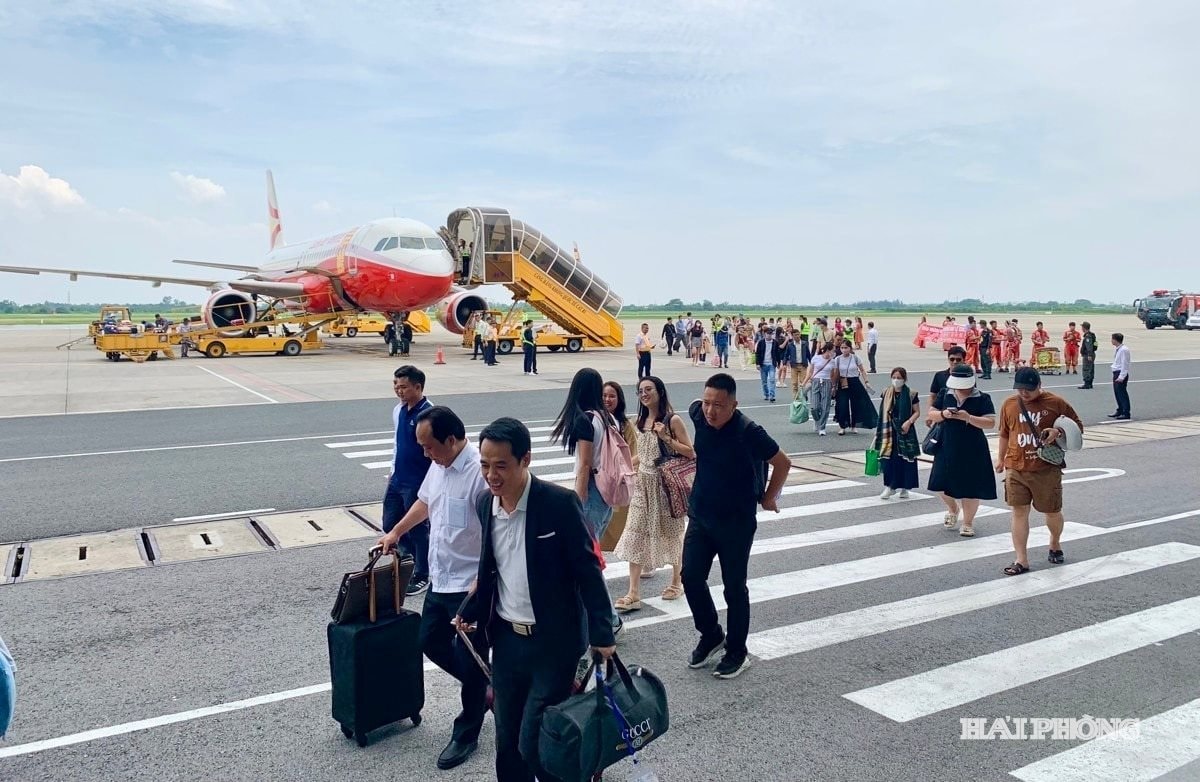
Hai Phong benefits from Cat Bi International Airport, one of the key airports in Northern Vietnam, meeting 4E standards (as classified by the International Civil Aviation Organization – ICAO). The airport can accommodate large aircraft and expand both domestic and international routes.
Several airlines have also chosen Cat Bi International Airport as an operational base, recognizing the importance of Hai Phong’s multimodal transport network, which offers connections to Cat Bi by road, rail, inland waterway, etc. In the near future, aviation connectivity will also improve on the city’s western side through links with Gia Binh Airport in Bac Ninh province.
This forms a foundation for Hai Phong to develop high-quality, sustainable tourism and attract high-spending visitor segments.
Linkage between tourism and aviation not only maximizes these advantages but also enhances Hai Phong’s competitiveness on the national and international tourism map. Hai Phong is not only an air transit point but also an appealing destination in its own right.
The conference on cooperation and promotion of development linkage between Hai Phong’s tourism sector and the aviation industry provided an opportunity for regulators, tourism businesses, and airlines to discuss practical solutions to strengthen collaboration. It also created opportunities to attract more new routes to Hai Phong to promote trade and stimulate tourism.
Reassessing and defining joint objectives to build a coordinated cooperation mechanism will form an important foundation for Hai Phong to enhance competitiveness and unlock its tourism potential. At the same time, aviation businesses will see opportunities for more effective expansion of exploitation in Hai Phong.
Strengthening linkages between tourism and aviation is not only a necessity but also a key strategy for sustainable tourism development in Hai Phong. Building a synchronized cooperation mechanism, leveraging infrastructure advantages, and harmonizing tourism products will help elevate the city as a destination and promote high-quality tourism.
BUI HANH