

Pagoda with the most ‘swastika’ symbols in Vietnam
Cuong Xa pagoda in Tan Hung ward, Hai Phong city, has been recognized by the Vietnam Book of Records as ‘the first pagoda in Vietnam with stone walls engraved with swastika symbols.’
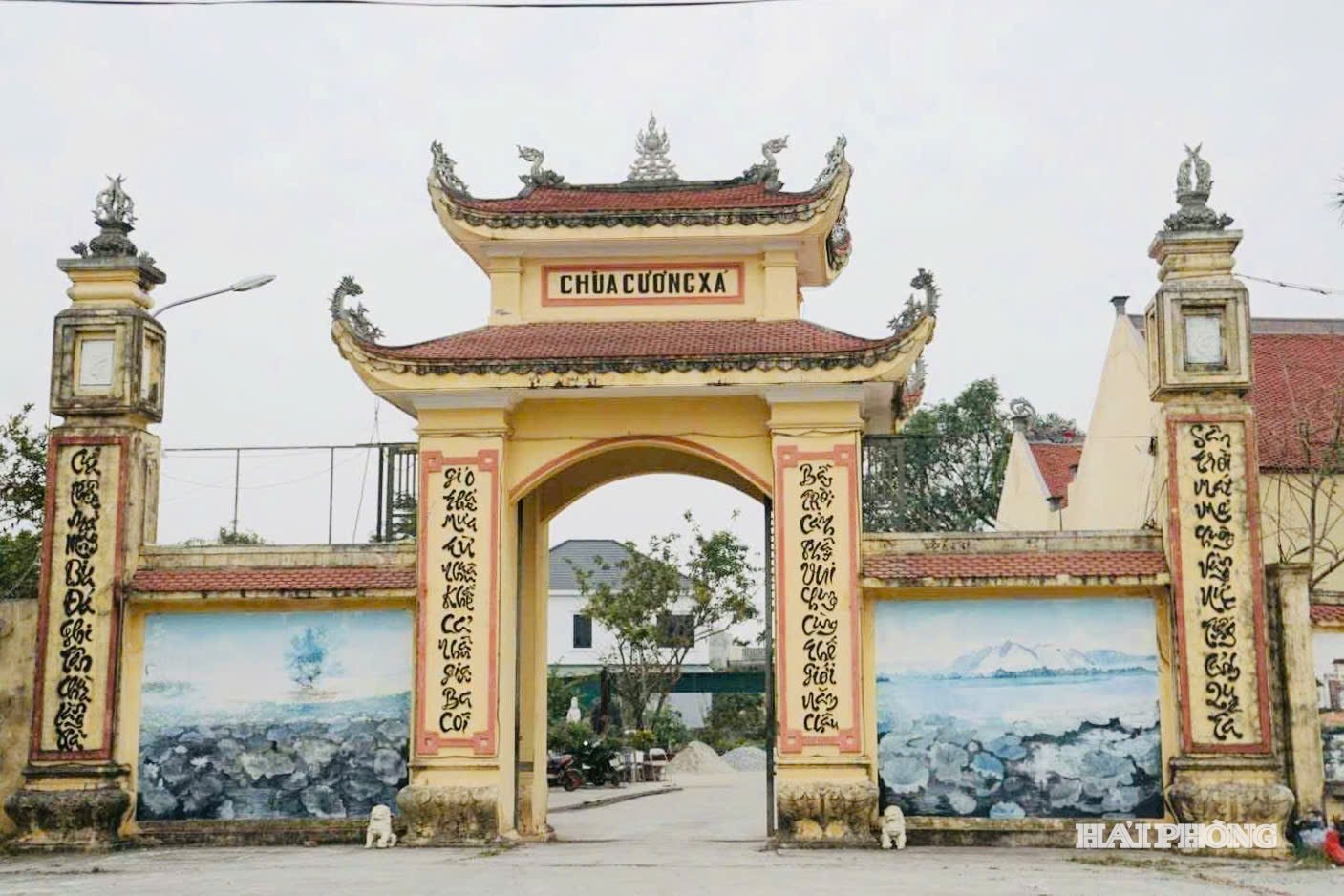
Unique hallmark
Stepping through the three-entrance gate of Cuong Xa pagoda, visitors are embraced by a sense of tranquility. Hidden under the canopy of centuries-old trees, the pagoda’s intricate architecture, elegant layout, and finely carved wooden details radiate solemnity and antiquity.
What makes Cuong Xa pagoda truly distinctive is its system of stone walls engraved with “swastika” symbols. From the temple’s base, the first three rows of stone are shaped like lotus flowers, representing purity and enlightenment.
From the fourth row upward, each stone block is embossed with a golden “swastika,” symbolizing the boundless light of Buddhist teachings. Each green stone block, sourced from Nhoi mountain in Thanh Hoa province, measures 40 cm long, 30 cm wide, 35 cm thick, and weighs up to 80 kg.
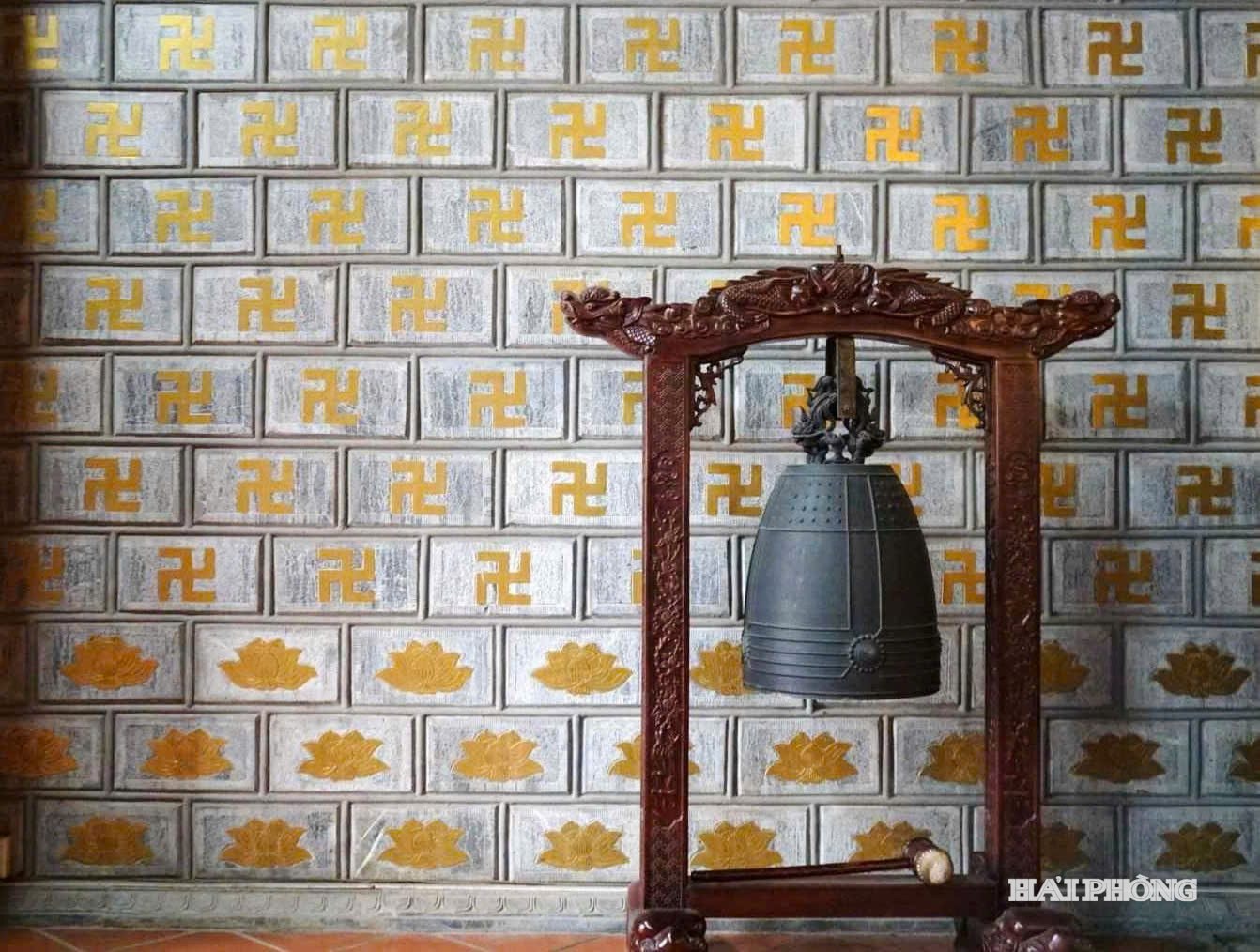
In total, the pagoda features 3,998 “swastika” symbols, creating an impressive visual effect that feels both sacred and timeless. This makes Cuong Xa the pagoda with the most “swastika” engravings in Vietnam.
According to Venerable Thich Thanh Cuong, the abbot of Cuong Xa pagoda, the idea of building a stone pagoda engraved with “swastika” symbols came from a wish to create a structure that would endure over time and radiate positive energy.
Spreading cultural and spiritual values
Cuong Xa pagoda, also known as Quynh Khau Tu (Go Ngoc pagoda), was recorded on ancient steles as having been restored during the reign of King Le Vinh To (1627).
During wartime, the pagoda was destroyed, leaving only the foundation. After peace was restored, local residents rebuilt the pagoda on a smaller scale with three compartments. However, many ancient relics were preserved, including old stone steles, a bronze bell from the Le dynasty, two pairs of parallel sentences, and ancient statues.
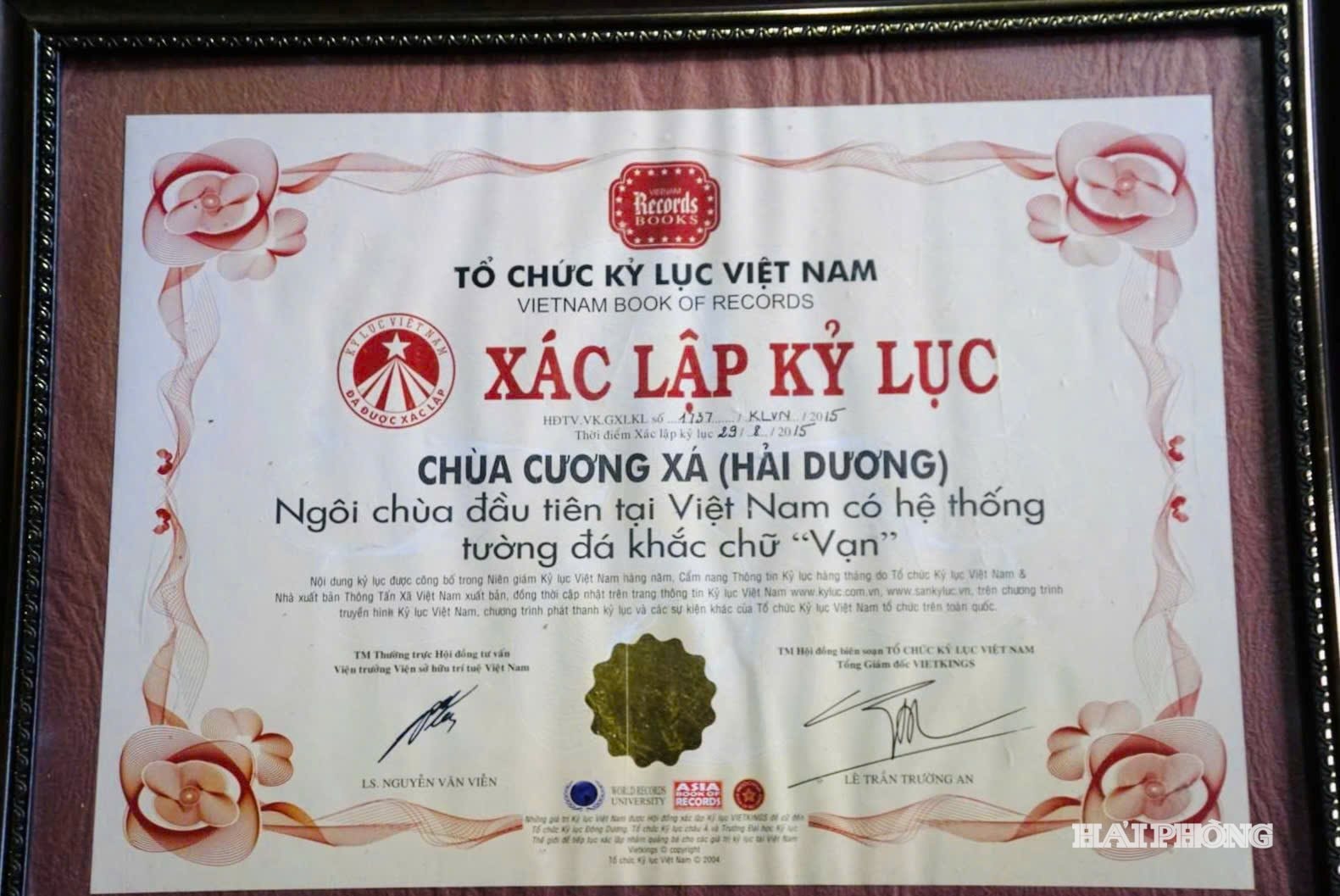
When digging the foundation for reconstruction, workers discovered bricks dating back more than 2,000 years to the Eastern Han period, confirming the long history of Cuong Xa pagoda.
With the aspiration to restore the ancient structure, in 2009, the pagoda sought permission from the former Hai Duong provincial authorities to renovate and reconstruct the pagoda on its original site. After overcoming numerous challenges, the project was completed seven years later.
The pagoda covers a total area of 360 m2, with a 1,600-m2 courtyard and garden. On the right stands the ancestral hall with 14 compartments, and on the left are shrines dedicated to the Mother Goddess and Saint Tran Hung Dao.
On April 24, 2016, during the inauguration of the main hall, the Vietnam Book of Records officially announced its recognition of Cuong Xa pagoda as “the first pagoda in Vietnam with stone walls engraved with swastika symbols.”
The recognition not only honors the creativity and devotion of Venerable Thich Thanh Cuong and local Buddhists but also affirms the pagoda’s unique cultural, architectural, and spiritual values.
HA NGA