
Bamboo leaf export sparks green, sustainable development ideas
A small story from Nguyen Trai ward, where locals harvest bamboo leaves for export to Japan and Europe, is opening a new direction for Hai Phong’s agriculture.
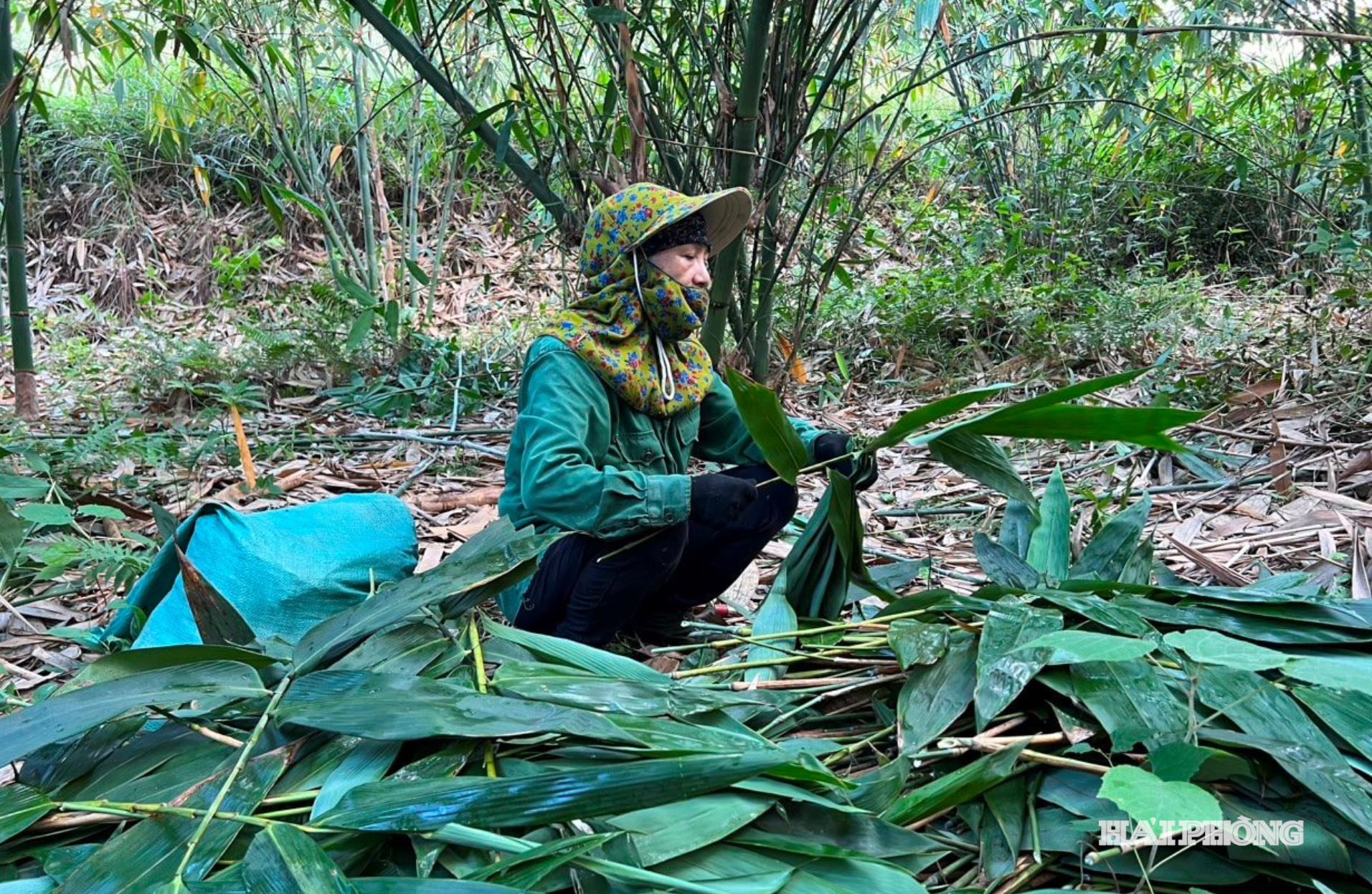
A friend from Nguyen Trai ward, Hai Phong city told me that locals there now grow Bat Do bamboo not only for shoots as before, but also to sell the leaves for export.
From May to November each year, villagers harvest and carefully pack bamboo leaves for export to Japan and Europe, where they are used for wrapping cakes, holding food, or decorating dishes. The story of these “Western-traveling” bamboo leaves may seem small, yet it vividly illustrates how Vietnamese farm products are reinventing themselves.
According to customs data, in the first eight months of 2025 alone, Vietnam exported nearly 9 million USD worth of leaves, including banana, cassava, bay, and bamboo leaves, up 27% year on year.
The export of leaves reflects an important shift in agriculture, from harvesting only the main product to utilizing the whole plant. Bamboo leaves, banana sheaths, cassava leaves… can all become valuable products if properly processed and aligned with global green consumption trends. This is a direction Hai Phong’s agriculture, long known for its rice, banana, corn, bamboo, and sedge cultivation, can fully embrace.
In fact, Hai Phong generates a huge amount of agricultural byproducts each year. Hundreds of thousands of tons of rice straw, corn stalks, banana trunks, and leaves are left in the fields, most of which are burnt to prepare for the next crop. Yet if these materials were pre-processed, they could become valuable resources. The model in Nguyen Trai ward is a typical example of turning agricultural byproducts into commodities, helping farmers increase income while reducing agricultural waste.
The story of exporting leaves carries even greater significance as Vietnam moves to phase out single-use plastics. Under the Government’s Decree No. 08/2022/ND-CP, starting January 1, 2026, the production and import of non-biodegradable plastic bags smaller than 50cm x 50cm will be banned. After 2030, all single-use plastic products will be phased out completely. By then, bio-based materials, especially products made from natural leaves, sheaths, and fibers, will become an inevitable alternative.
We’ve grown accustomed to the convenience of plastic bags and cups, rarely considering that such ease comes at the cost of the environment for future generations. Developing substitutes from agricultural byproducts, such as bags, containers, packaging, straws, and ties, is therefore not just an economic opportunity, but a vital path toward rescuing a planet suffocating in plastic.
Hai Phong holds a dual advantage as a coastal industrial and service hub that still maintains a strong agricultural base, especially in its western areas. The city is therefore well-positioned to lead this green transition. With well-organized raw material zones, cooperatives equipped for byproduct processing, and enterprises investing in biotechnology, banana sheaths, corn stalks, and bamboo leaves could form the foundation of a green supporting industry that protects the environment while driving sustainable rural development.
Today’s bamboo leaf may be used to wrap cakes or serve food, but the story doesn’t end there. It opens up a vision for Hai Phong’s agriculture, where materials once discarded are transformed into useful products, and farming not only produces food but also creates environmental and social value.
HAI MINH