
Making English second language in Hai Phong schools
In the context of deep global integration, English proficiency has become a competitive advantage for individuals and an indicator of international integration for localities and nations.
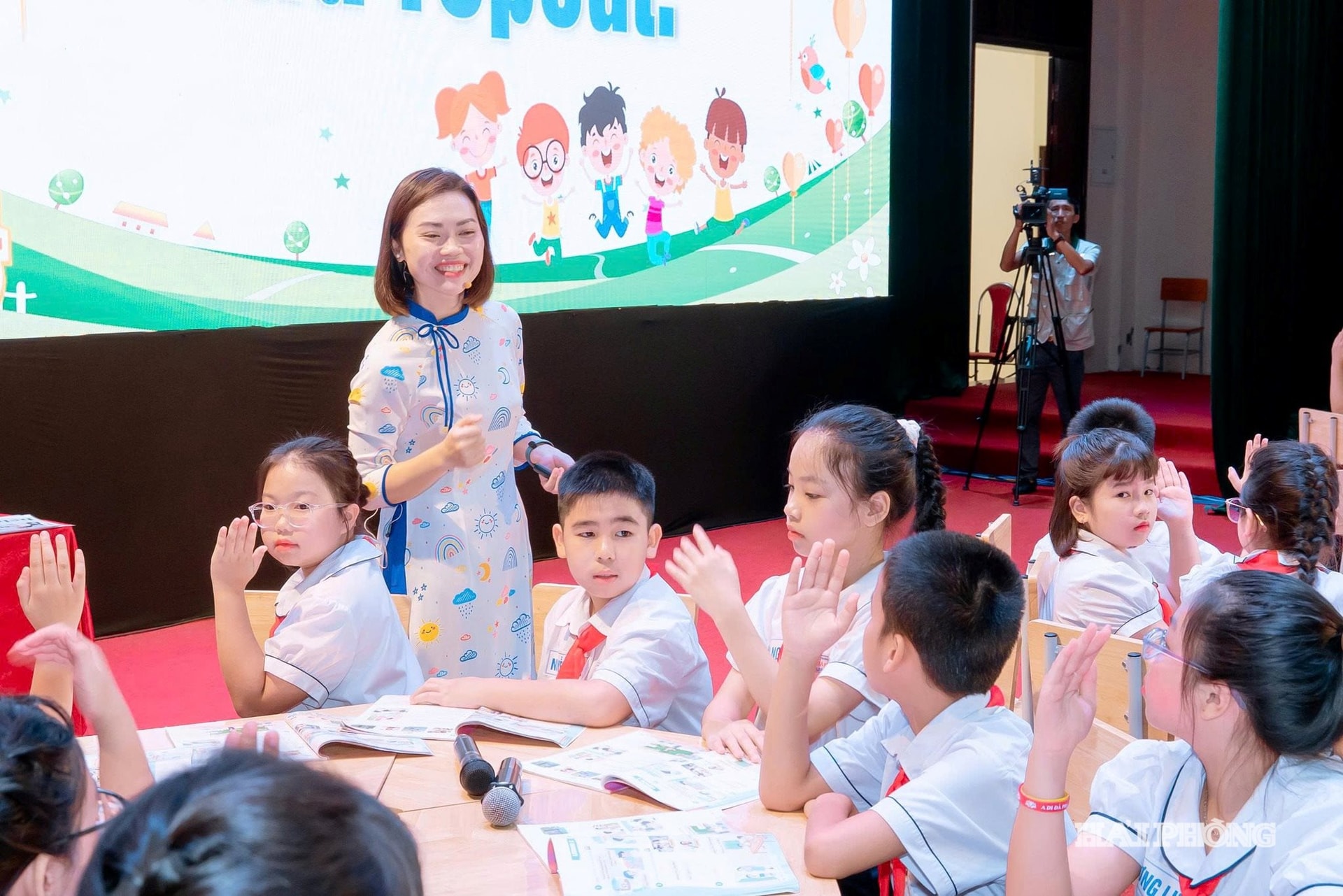
Last week, the Hai Phong Department of Education and Training organized two city-level workshops: “Teaching mathematics in English, aiming to make English the second language in schools” and “Developing English skills with the support of artificial intelligence (AI) to explore knowledge and carry out learning projects.” These initiatives mark concrete steps toward realizing the Politburo’s Resolution No. 71-NQ/TW on breakthroughs in education and training, which emphasizes “enhancing foreign language teaching and learning, and gradually making English the second language in schools.”
This effort is not entirely new. In recent years, Hai Phong has actively taken a range of coordinated measures to achieve the goal of making English the second language in schools.
Previously, English teaching mainly focused on basic communication skills. Now, Hai Phong is shifting toward an integrated learning model in which English becomes a medium for delivering scientific knowledge, especially in natural science subjects.
Teaching mathematics in English not only strengthens students’ logical thinking and academic expression but also builds their capacity to access global knowledge, an essential condition for participating in international exams, exchange programs, and scholarships.
The organization of these thematic sessions also reflects the innovative mindset of Hai Phong’s education sector: not waiting or copying existing models, but proactively experimenting, learning, and expanding. Demonstration lessons, professional seminars, and feedback from teachers and students serve as a foundation for developing a standardized bilingual curriculum in the future.
Making English the second language in schools is a long journey with many challenges, from teachers’ language proficiency and facilities to the varying learning abilities among students in different areas. However, Hai Phong is demonstrating that with determination and the right strategy, real transformation is possible.
The Department of Education and Training is promoting key measures such as enhancing English proficiency and integrated teaching skills for teachers; expanding bilingual classes across educational levels; and organizing workshops, seminars, and English-based demonstration lessons to share experiences and replicate effective practices.
At the same time, the department annually organizes competitions in mathematics and natural sciences in English to identify, nurture, and honor talented students. These events also provide academic exchange opportunities, helping schools integrate internationally and improve the quality of English teaching and learning in specialized subjects.
Through these competitions, teachers have more opportunities to exchange expertise and strengthen their academic English skills, while students are inspired to pursue research, develop logical thinking, and practice teamwork in English.
These efforts reflect the strong determination of Hai Phong’s education sector to build a solid foundation for making English the second language in schools, toward a generation of teachers and students who are confident, globally minded, and master knowledge in the modern era.
BUI HANH