
Enhancing value of OCOP products
In recent years, many traditional festivals have become ‘stages’ to showcase and promote OCOP and typical agricultural products of Hai Phong city.
Spaces for promoting OCOP products
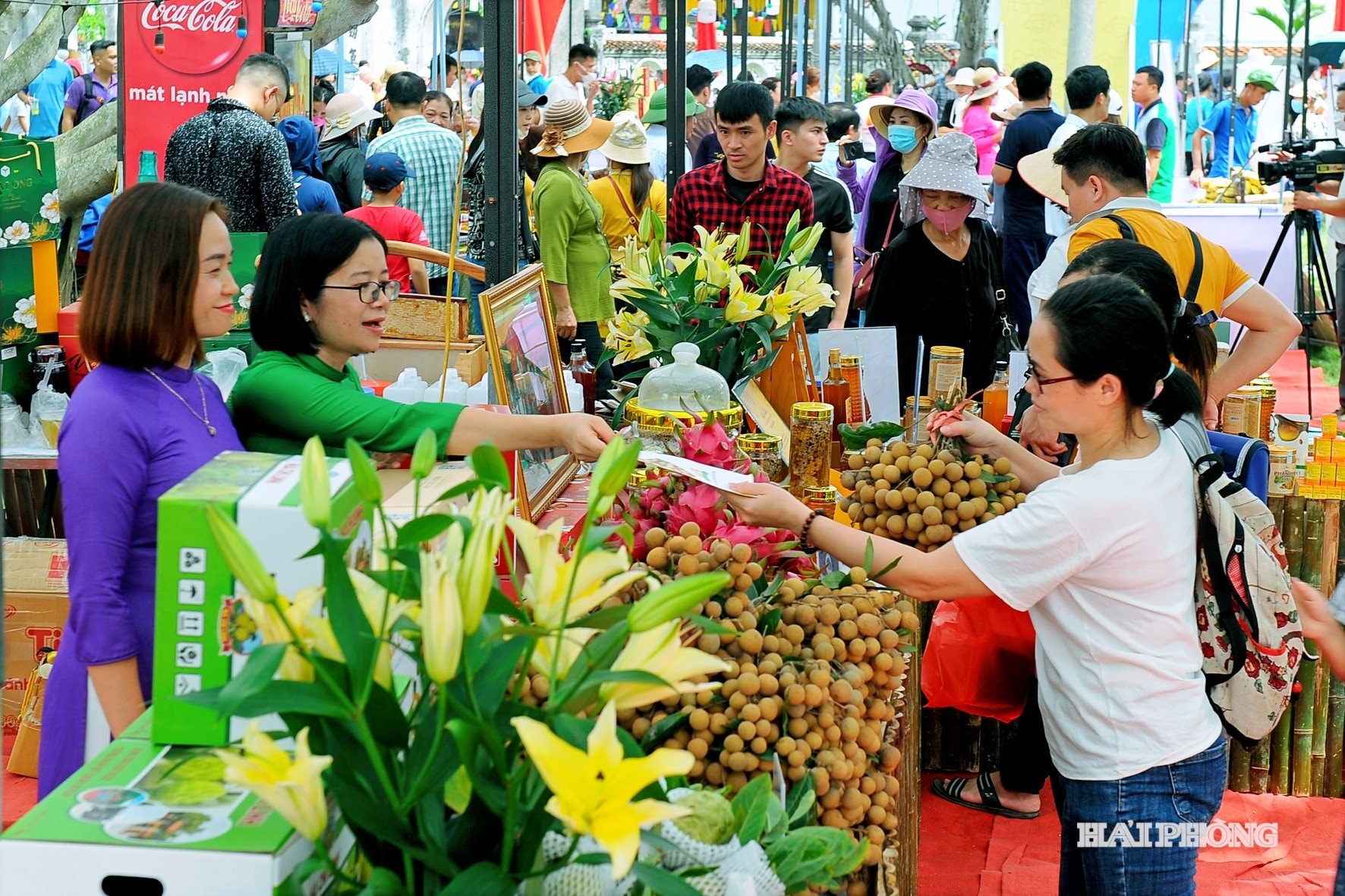
Every autumn, tens of thousands of visitors flock to Con Son – Kiep Bac festival in Hai Phong city. Alongside solemn rituals honoring ancestors, it is easy to spot stalls displaying typical agricultural products. From mung bean cakes, Ninh Giang ramie cakes, Dong Phuong jam cakes, An Lac glutinous rice cakes, and baguettes to OCOP products such as Viet Y honey, Cat Hai and Quang Hai fish sauce, all are presented in a dignified, festive atmosphere.
Not only Con Son – Kiep Bac, many other festivals across the city also integrate activities to promote local products.
“At festivals, besides ceremonial and festive parts, I love visiting OCOP stalls. I can taste specialties right there and buy some as gifts. Thanks to that, I’ve discovered many new Hai Phong products I’d never heard of before,” said Nguyen Van Tung, a visitor from Ha Noi. Clearly, promoting products at festivals delivers dual benefits: enhancing the festivals’ appeal while expanding markets for local goods.
Hai Au Viet Investment JSC. in Hai An ward is among 30 entities displaying products at the Con Son – Kiep Bac Autumn Festival. “This year’s festival is held on a large scale, the first one since Hai Phong expanded its administrative boundaries, so we wanted to bring our products here for more locals and visitors to learn about them. It’s also an opportunity to promote Hai Phong’s image to friends at home and abroad, affirming the stature of Con Son – Kiep Bac relic site,” said Tran Van Trung, General Director of Hai Au Viet Investment JSC.
Linking culture – tourism – economy
According to Pham Thi Dao, Deputy Director of the Department of Agriculture and Environment, all entities invited to participate in promotional events showed great enthusiasm and had distinctive and reputable products.
Statistics show that the city hosts hundreds of festivals each year, attracting millions of visitors. This is a valuable resource for the locality to exploit and connect OCOP product development with community tourism.
Promoting agricultural products at festivals not only diversifies festival activities, making them richer and more engaging, but also boosts product consumption and creates sustainable livelihoods for rural residents. This is how OCOP products can reach further and become strong brands.
For visitors, the opportunity to experience and shop at OCOP booths adds to the excitement. Beyond attending processions and rituals, festivalgoers can explore culinary culture and regional specialties. This is the harmonious synergy between culture, tourism, and economy.
DUC HUY