
Hai Phong trains confident, integrated generation of students
Amid deep international integration, Hai Phong’s education sector is proactively diversifying foreign language teaching and learning to nurture a generation of confident students ready to adapt to the era.
Proactive expansion of foreign language options
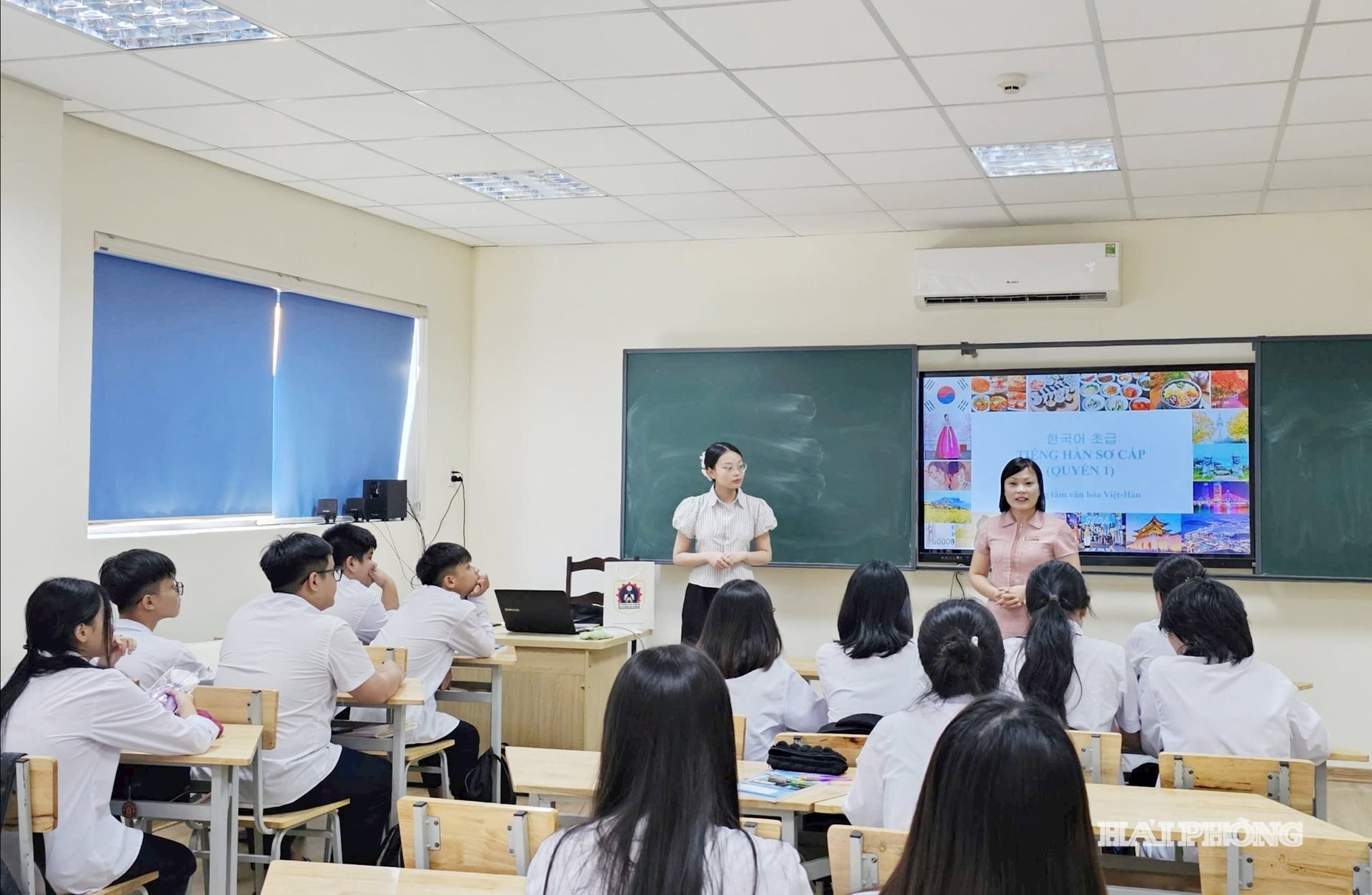
From this school year, 10th-grade students at Luong The Vinh High School in Hai Phong city are taking two foreign languages simultaneously under the motto “knowing two foreign languages is an advantage.” This initiative received strong support from parents, helping the program run smoothly and attract wide student participation.
“By choosing English and Chinese, I can access a lot of learning materials and broaden my international communication. Knowing multiple languages is also a great advantage for future work in environments with foreign cooperation,” said Cao Thi Bao Ngoc, a student from class 10A3.
Principal Ho Thi Dinh said that for 10th graders, one class is designated with Chinese as the first foreign language, while the others study English. In addition to the first foreign language, students can choose among English, Chinese, Japanese, or Korean as their second foreign language in classes or clubs. Every week, students have three additional lessons for the second foreign language or participate in language clubs on Saturday afternoons when there are no regular classes.
This is the fifth year Luong The Vinh High School has pursued its multi-language education roadmap. According to Principal Dinh, the school aims for students to finish high school not only equipped with knowledge of technology and AI but also proficient in two foreign languages, providing them an advantage in further studies and future careers.
Recognizing that foreign languages open doors to opportunities, knowledge, and the future, many schools are actively seeking to diversify foreign language learning. Nguyen The Toan, Principal of Kim Thanh High School, said the school is studying and surveying options to allow students to register for Chinese and Korean classes next year.
Learning quality improvement
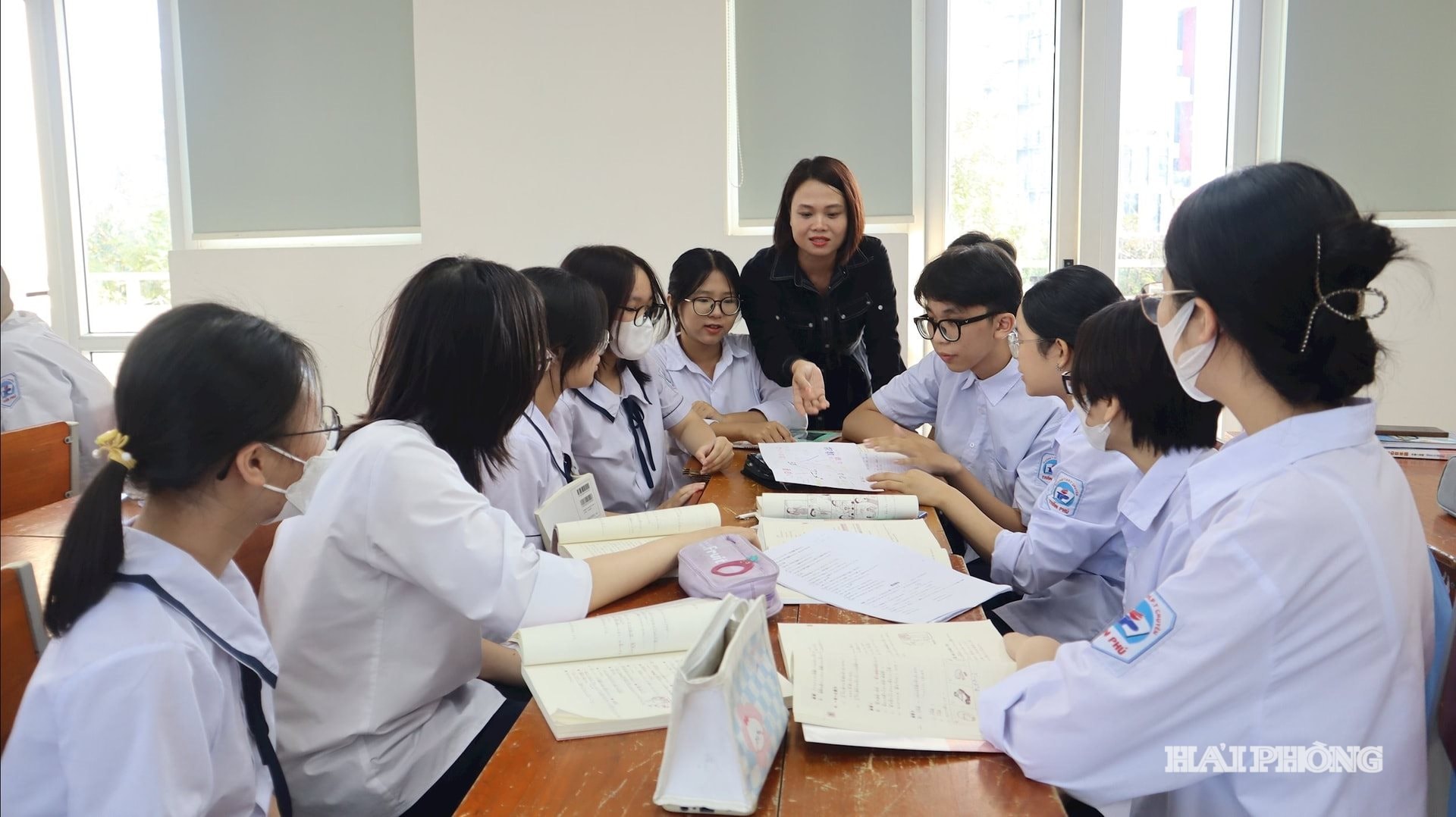
Over the past time, the city’s education sector has focused on improving the quality of foreign language teaching at all levels. Currently, 258 out of 594 preschools, with 44,651 children, or 24% of total kindergarteners, offer English familiarization activities. Under the 2018 General Education Program, foreign languages are compulsory from grade 3, and 100% of Hai Phong’s students from grades 3 to 5 study a foreign language. At the secondary level, all schools have strengthened programs and coordinated to teach foreign languages toward international certification standards.
With the efforts of the education sector and some local schools, in the 2023–2024 school year, Hai Phong became the first locality in Vietnam to introduce Korean as the first foreign language in general education. After one pilot year, Korean has been available in nearly 40 schools as the first or second foreign language in classes and clubs.
In addition, Japanese is taught in two high schools and five secondary ones, while Russian, French, and Chinese are offered alongside English at many institutions. To enhance foreign language teaching and learning, schools regularly organize foreign language learning movements, create foreign language practice environments through extracurricular activities, clubs, and international student exchanges.
As Hai Phong builds itself into an international integration city, the education sector is prioritizing the diversification of foreign language education. The Department of Education and Training has directed the implementation of city-level thematic programs on language teaching and learning, focusing on developing students’ four essential skills, listening, speaking, reading, and writing, from the earliest levels.
The department has also organized citywide contests for excellent high school teachers who teach subjects such as mathematics, physics, and chemistry in English, as well as English-based math and science competitions for students to practice and enhance their foreign language skills.
Schools are also actively improving teacher qualifications, renewing teaching methods, and reforming testing and assessment to inspire students’ motivation and passion for foreign languages, fostering a proactive, confident, and globally integrated learning environment.
BUI HANH